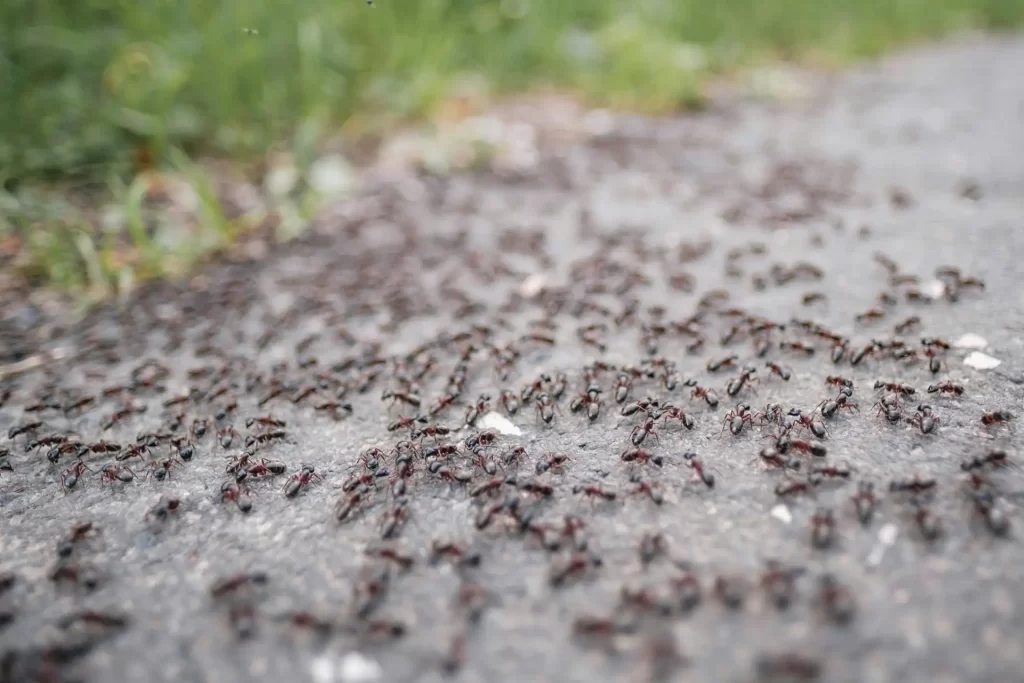
Ants can infest and invade homes in large numbers, contaminating food and damaging structures. Ants have a keen sense of smell and can detect even the smallest crumbs of food in kitchens, pantries, and dining areas, leading to infestations. Once inside a home, ants can create trails and colonies in walls, floors, and other hidden areas, making it difficult to eradicate them completely. In addition, some species of ants, such as carpenter ants, can damage wood structures and cause significant damage to homes.
Ant infestations can be a nuisance and can pose health risks to humans. Ants can carry and transmit bacteria, viruses, and other pathogens, potentially contaminating food and surfaces in the home. Some species of ants, such as fire ants, can also inflict painful bites and stings, which can be dangerous, especially for people who are allergic to them.
Species of Ants
Pavement Ant
Tetramorium immigrans
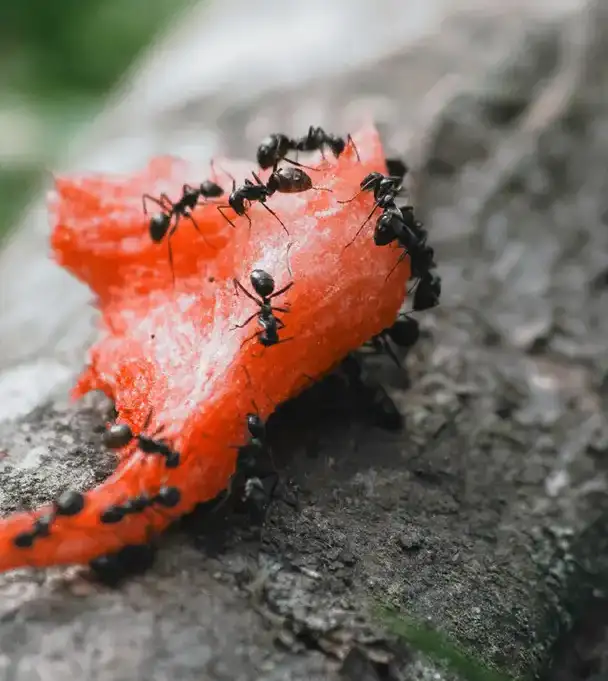
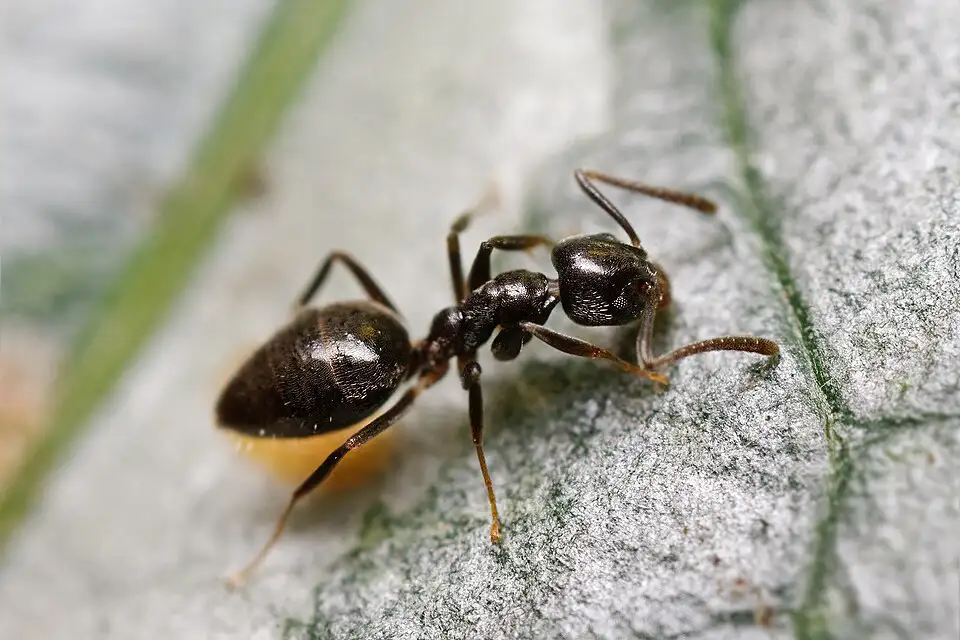
Black ants, commonly known as black garden ants or black house ants, are small, dark-colored ants often found in and around homes. They typically measure between 1/16 to 1/4 inch in length and are known for forming large colonies with well-defined foraging trails. Black ants are attracted to sweet foods and can often be seen invading kitchens, pantries, and outdoor trash areas. While they don’t bite or sting and are not harmful to humans, their presence indoors can be a persistent nuisance. They nest in soil, under stones, or inside wall voids and are known for their ability to find even the smallest crumbs.
Carpenter Ant
Camponotus species
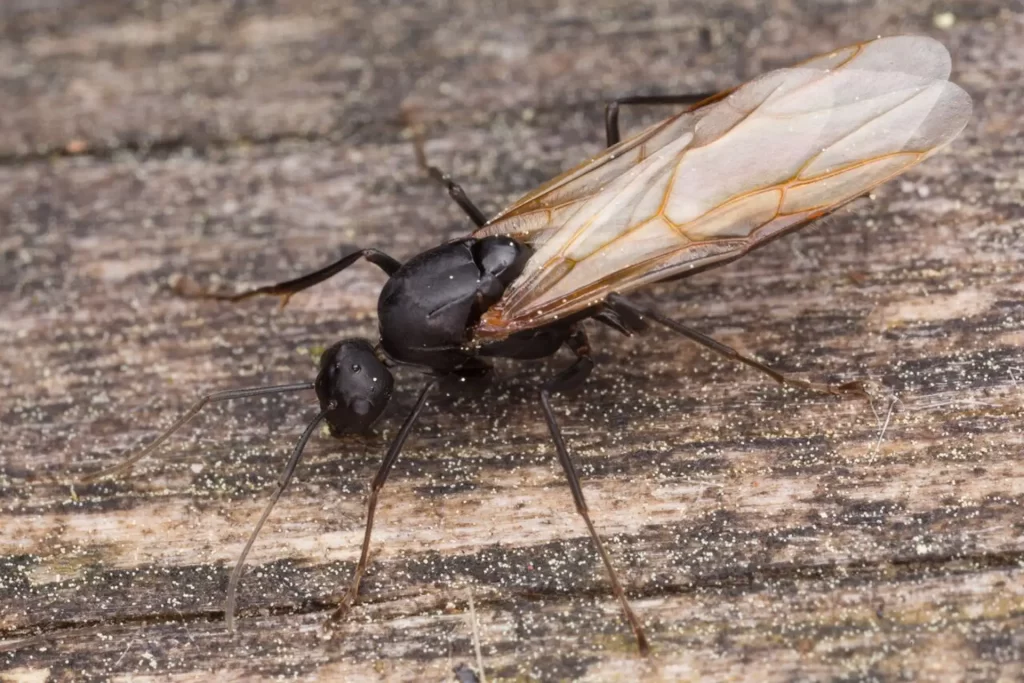
Carpenter ants are among the largest ants found in Utah, typically ranging from ¼ to ½ inch in length. They are usually black, reddish-black, or completely red, with strong mandibles and a smooth, rounded thorax. Some male species have wings. Unlike termites, carpenter ants do not eat wood—they excavate it to build nests, which can cause structural damage over time. In Utah, they are commonly found in moist, decaying wood around homes, including in wall voids, decks, attics, or tree stumps. While they don’t sting, they can bite if provoked, and their presence indoors is often a sign of a larger hidden colony that may require professional control.
Field Ant
Formica species
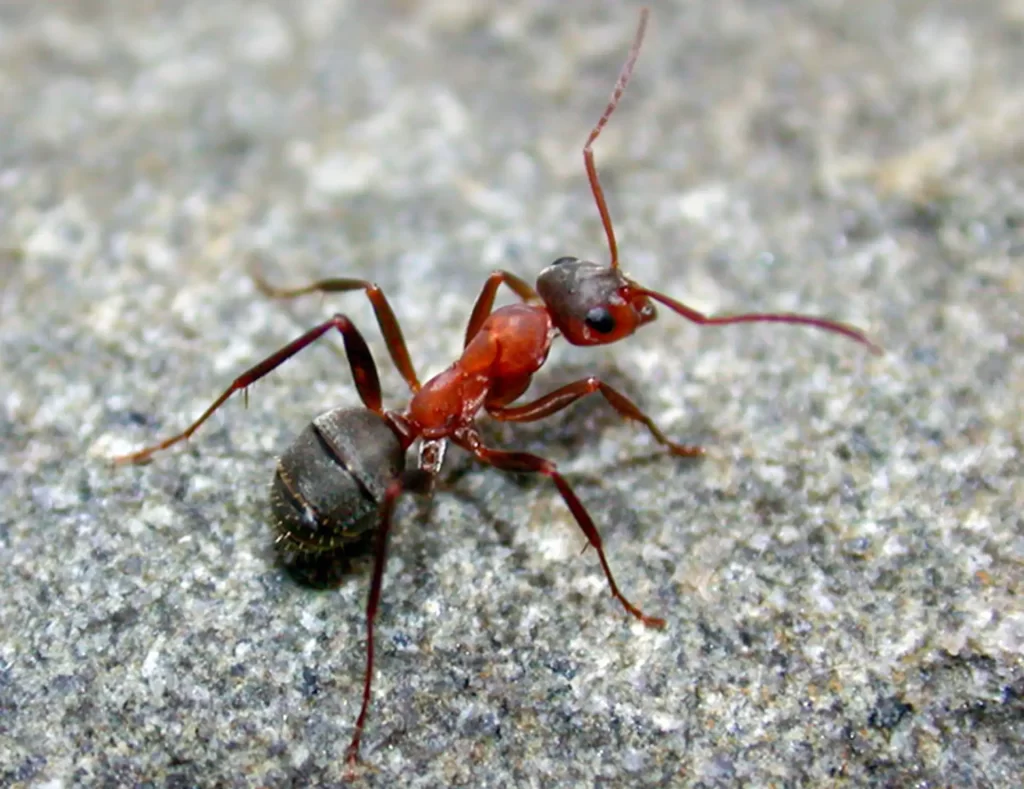
Field ants are medium to large-sized ants, typically red, black, or a combination of both, and are commonly found in open areas like lawns, fields, and along sidewalks or trails. These ants build large, dome-shaped mounds in soil, often noticeable in sunny, dry areas. While they usually remain outdoors and don’t typically invade homes, they can become a nuisance due to their large colony sizes and aggressive foraging habits. Field ants do not sting, but they can bite and spray formic acid if threatened, which may cause mild irritation. In Utah’s arid climate, they play a role in natural pest control but can be problematic when nesting near structures or high-traffic areas.
Odorous House Ant
Tapinoma sessile
Odorous house ants are small, dark brown to black ants measuring about 1/16 to 1/8 inch long, commonly found in and around homes throughout Utah. They get their name from the strong, rotten coconut-like odor they release when crushed. These ants are known for forming large colonies and foraging in long trails, especially in search of sweets and moisture. They often nest indoors in wall voids, under floors, or near water sources like sinks and pipes, and outdoors under rocks, mulch, or logs. While they don’t bite or sting, their persistent presence indoors can be a significant nuisance, especially once they establish multiple nesting sites.
Red Ant
Solenopsis invicta
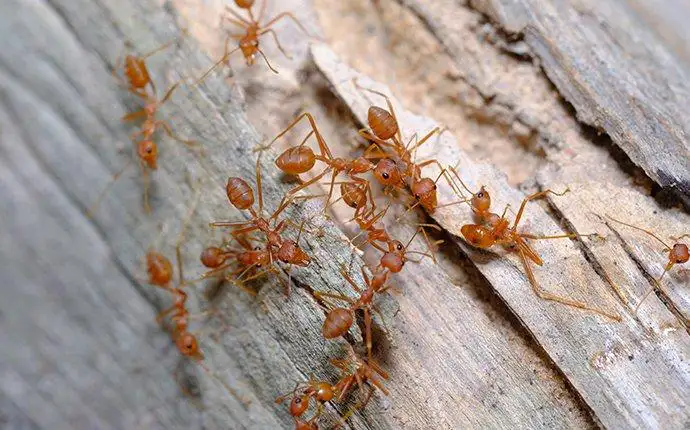
Red ants, commonly referred to as red imported fire ants or other red-colored ant species, are aggressive, colony-forming insects known for their painful stings and territorial behavior. They range from reddish-brown to deep red in color and typically measure between 1/8 to 1/4 inch long. Fire ants build large, dome-shaped mounds in open areas like lawns, gardens, and fields, and will swarm quickly if their nest is disturbed. Their sting can cause a burning sensation, followed by itchy welts or pustules, and can be dangerous to those with allergies. Red ants are highly invasive, tough to eliminate without professional help, and pose serious risks to both people and pets.
Harvester Ant
Pogonomyrmex species
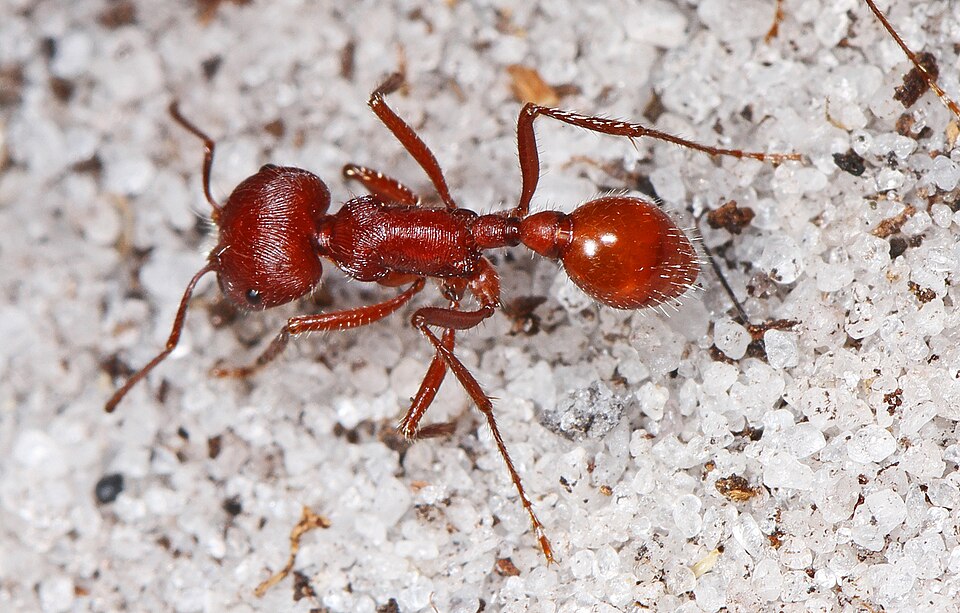
Harvester ants are large, reddish-orange to dark brown ants commonly found in Utah’s dry, open areas like deserts, fields, and rangelands. They are known for creating large, flat, gravel-covered mounds with little to no vegetation around them, as they clear the area to protect their nests from predators and flooding. Harvester ants primarily feed on seeds, which they collect and store in their underground colonies—hence their name. While generally not aggressive unless provoked, their sting is very painful and can cause swelling or allergic reactions. These ants play an important ecological role in seed dispersal but can pose a stinging hazard in recreational or residential areas.
Preventing ants from invading your home or yard involves a combination of cleanliness, sealing entry points, and eliminating attractants. Here are some effective prevention methods:
1. Keep Your Home Clean
Wipe up food crumbs, spills, and sugary residues immediately.
Store food in airtight containers.
Take out the trash regularly and keep bins tightly sealed.
Clean pet food bowls and avoid leaving pet food out overnight.
2. Seal Entry Points
Caulk cracks and gaps around doors, windows, and foundations.
Install door sweeps and repair torn window screens.
Check for and seal openings around pipes, vents, and cables.
3. Control Outdoor Attractants
Keep trees and shrubs trimmed away from your home’s exterior.
Eliminate standing water and fix leaky faucets or irrigation systems.
Store firewood and building materials away from the foundation.
4. Use Natural Deterrents
Sprinkle substances ants dislike near entry points: cinnamon, vinegar, lemon juice, peppermint oil, or diatomaceous earth.
Clean surfaces with vinegar or citrus-based cleaners to disrupt scent trails.
5. Monitor and Act Quickly
Watch for scout ants and trails—early detection can prevent a full infestation.
Use bait stations to target colonies if ants are spotted.
6. Schedule Regular Pest Inspections
A pest control professional can help identify problem areas and provide long-term prevention strategies tailored to your property.
Have a Problem with Ants?
If you’re having a problem with ants, we can help. Contact us today to get a quote for pest control services