Centipedes and millipedes are classified as arthropods, belonging to the subphylum Myriapoda, which means “many legs.”
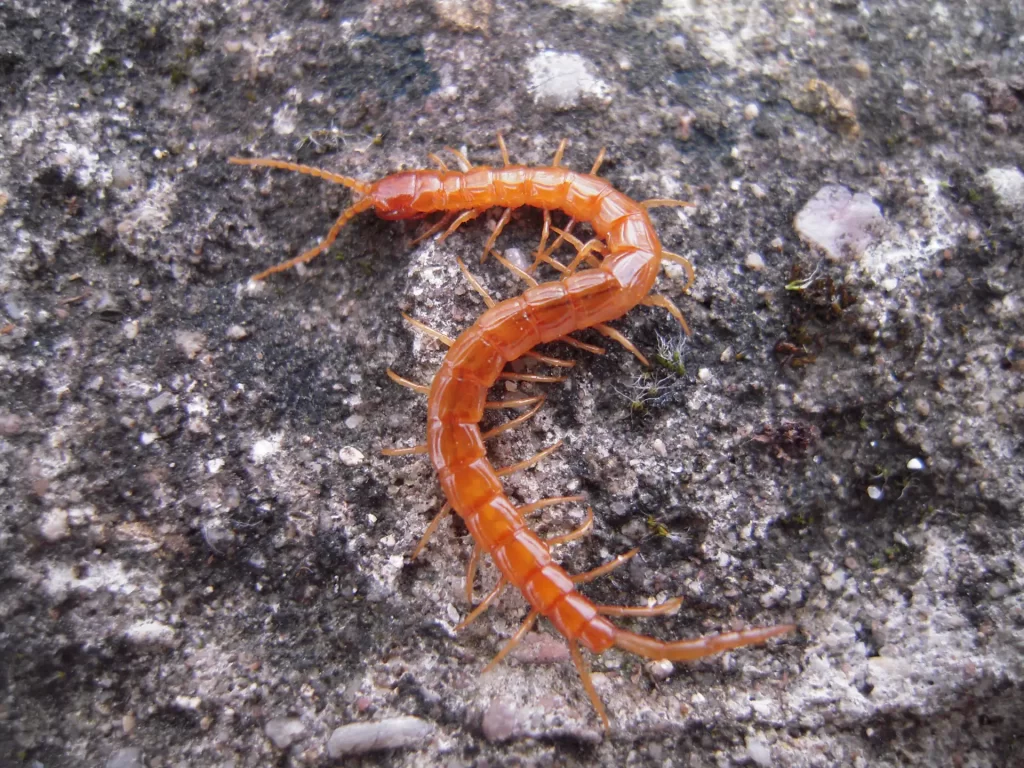
Centipedes have long, flattened bodies with many legs—one pair per body segment—and are typically tan, brown, or reddish. They are fast-moving predators that feed on other insects and spiders, making them somewhat beneficial, though their appearance can be alarming. Some species can bite if handled, but most pose little risk beyond mild irritation.
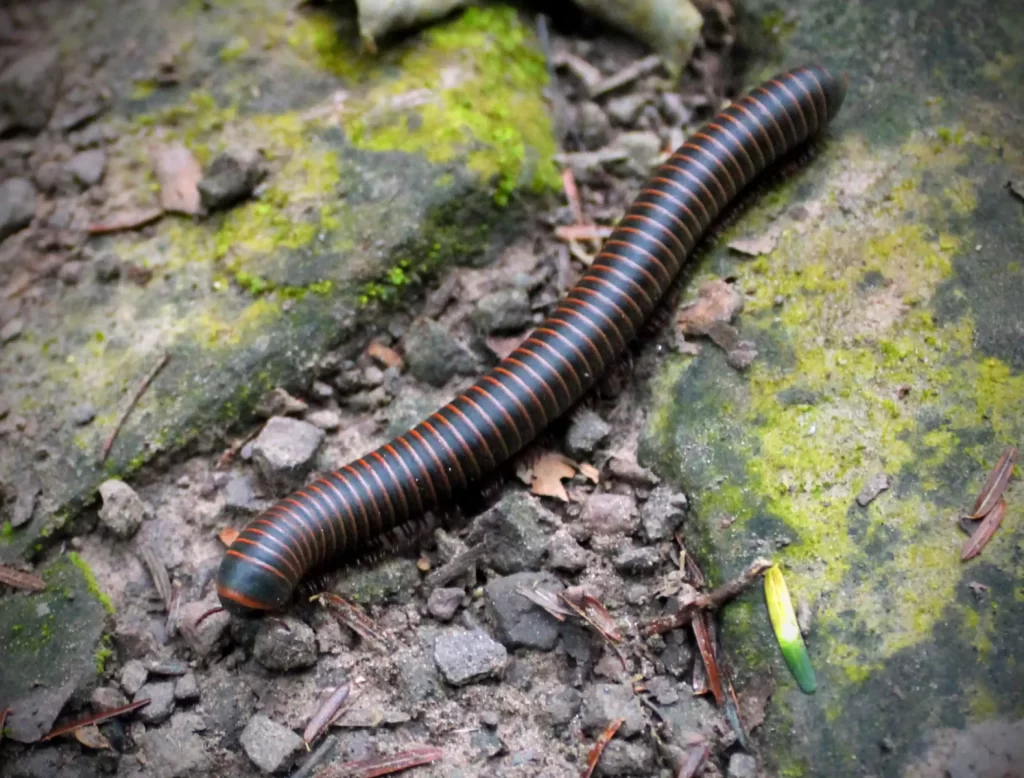
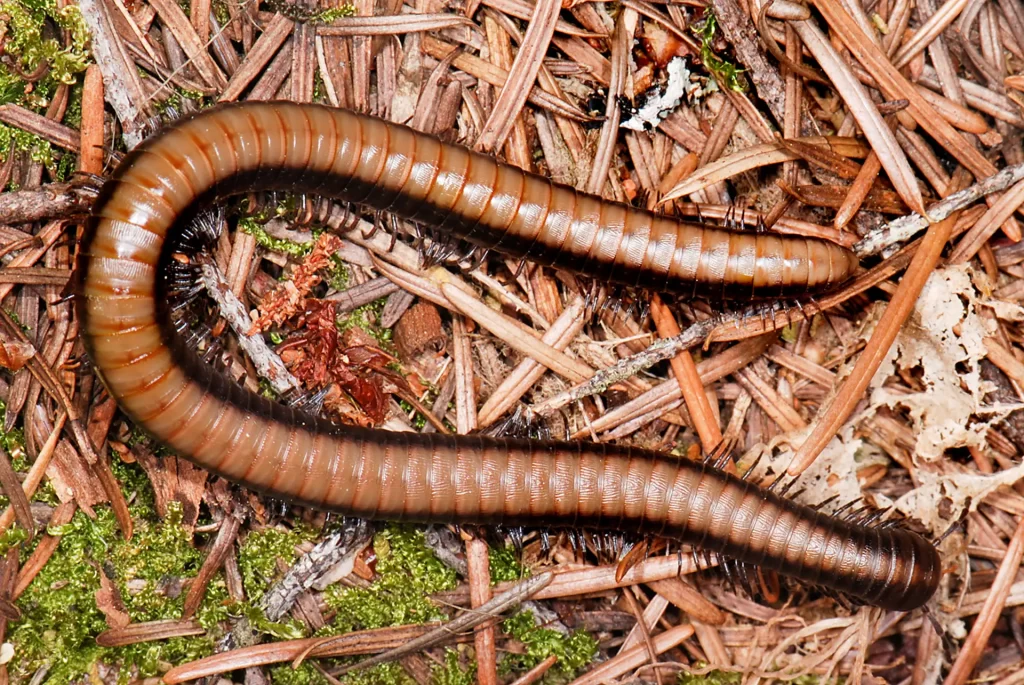
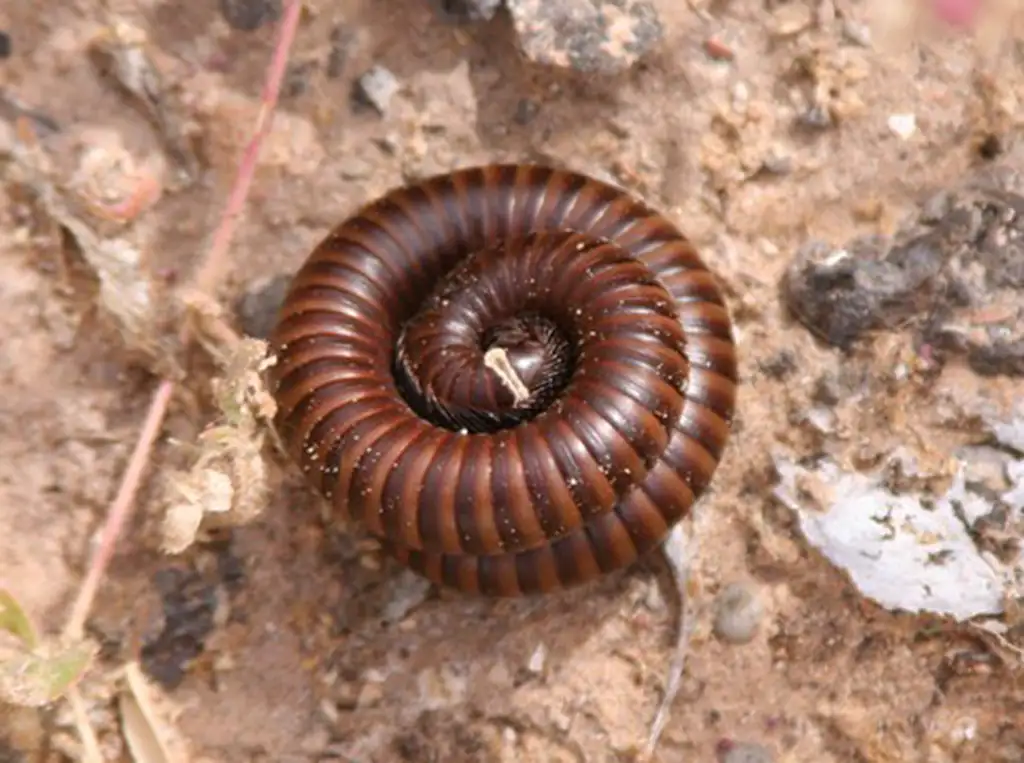
Millipedes, in contrast, have rounded, cylindrical bodies with two pairs of legs per segment and are usually dark brown or black. They are slow-moving scavengers that feed on decaying plant matter and are completely harmless to humans. When disturbed, millipedes may release a foul-smelling fluid as a defense.
Both are attracted to moist environments and may enter homes through foundation cracks, especially during wet or dry weather changes. Managing humidity, sealing entry points, and clearing yard debris are key to keeping these pests under control.
Species of Centipedes
House Centipede
Scutigera coleoptrata
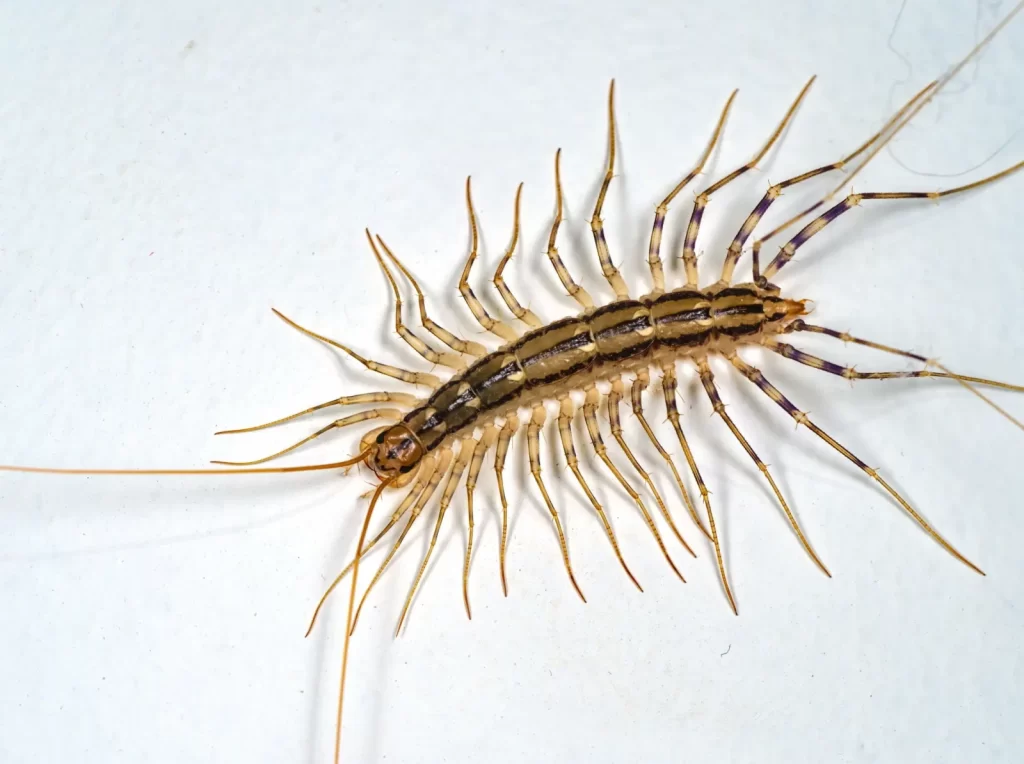
The house centipede is a common indoor arthropod found in Utah, recognized by its distinctive long legs and fast movements. It has a slender, yellowish-gray body with three dark stripes running lengthwise and can grow up to 1.5 inches long, though its legs make it appear much larger. House centipedes have 15 pairs of long, delicate legs, giving them a spider-like appearance and enabling them to move quickly across floors and walls.
They are harmless to humans and beneficial predators, feeding on pests such as spiders, ants, cockroaches, and silverfish. House centipedes prefer cool, damp areas like basements, bathrooms, and crawl spaces, and are most active at night. While they can bite if provoked, their bites are rare and typically cause no more than mild, localized irritation. Their sudden appearance indoors can be unsettling, but they are not destructive and do not infest homes, often indicating a larger pest population they are helping to control.
Desert Centipede
Scolopendra polymorpha
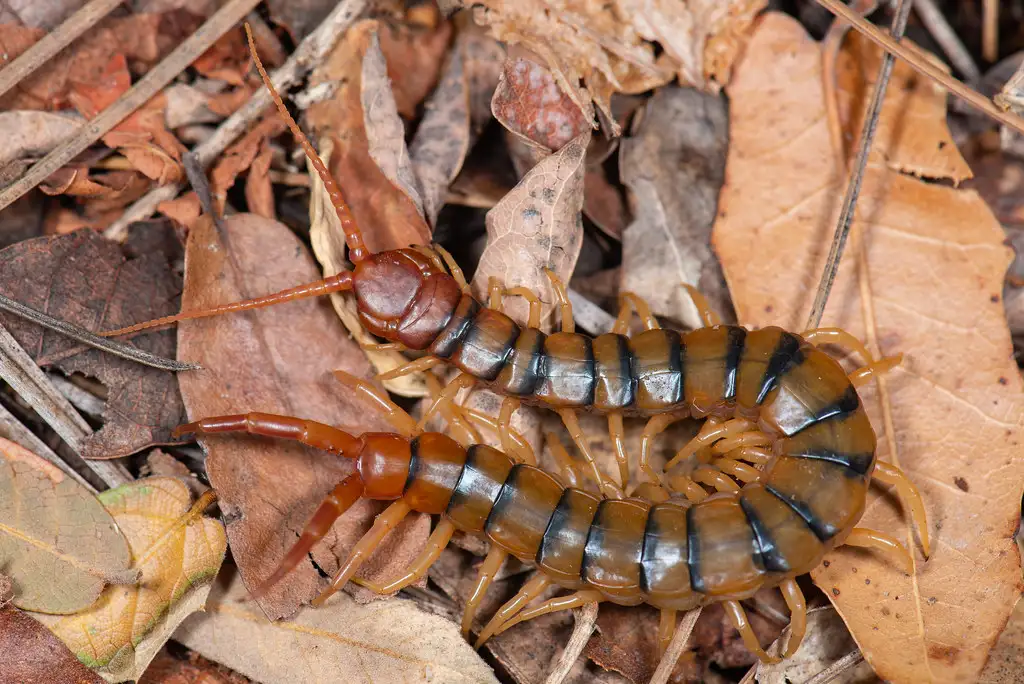
The desert centipede, also known as the tiger centipede, is one of the largest and most visually striking centipede species found in Utah. It typically measures between 4 to 6 inches long and features a reddish-orange head, yellow to tan body with dark bands or stripes, and long, powerful legs that allow it to move quickly. This centipede is a venomous predator that feeds on insects, spiders, and even small reptiles, using its venomous front legs (forcipules) to subdue prey. While generally not aggressive toward humans, it can deliver a painful bite if threatened or handled, causing swelling, redness, and a burning sensation. The desert centipede prefers dry, rocky environments and is commonly found under logs, stones, or in crevices. Although alarming in appearance, it plays a beneficial role in controlling other pest populations in Utah’s arid regions.
Soil Centipedes
Geophilomorpha order
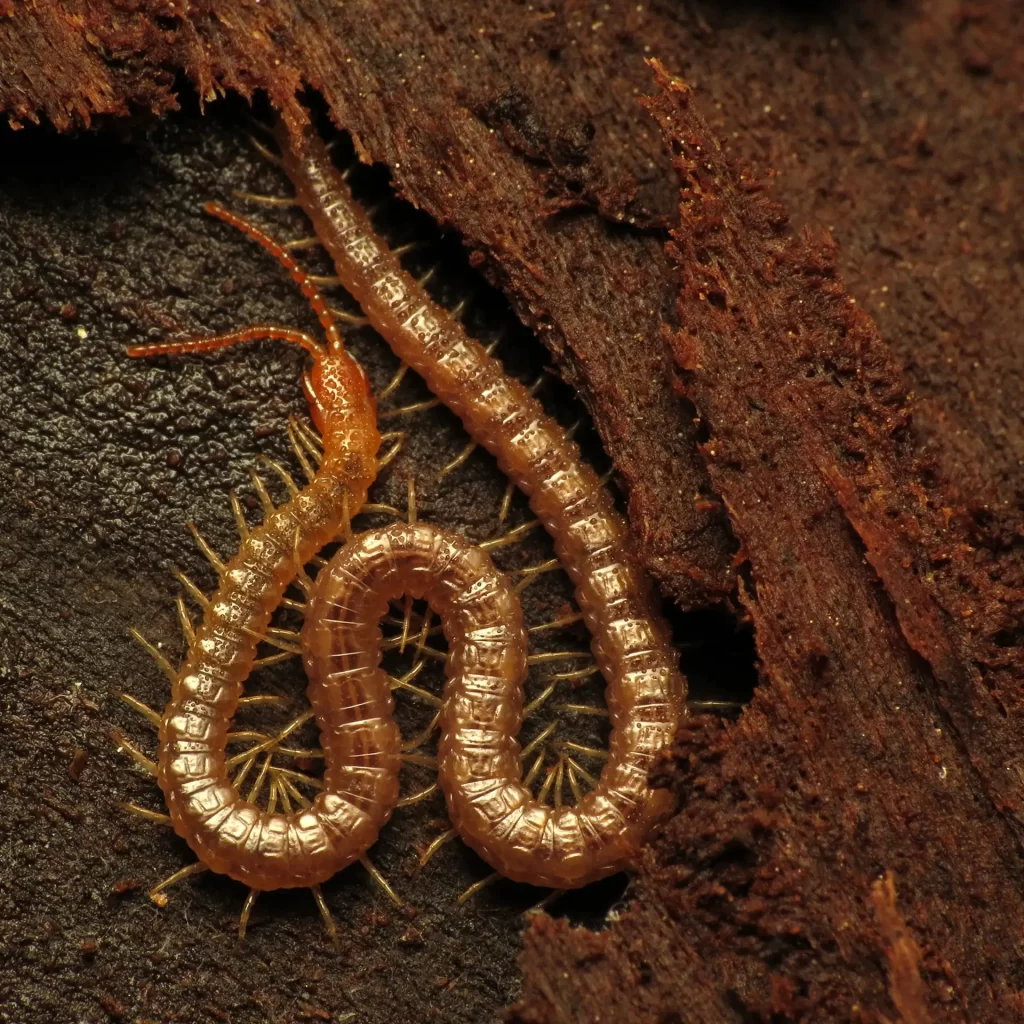
Soil centipedes, belonging to the order Geophilomorpha, are slender, worm-like centipedes commonly found in Utah’s soil and leaf litter environments. They typically measure 1 to 2 inches long and have pale brown to whitish bodies with numerous small segments, each bearing a single pair of tiny legs. Unlike more familiar fast-moving centipedes, soil centipedes are slow burrowers that live underground or under debris, feeding on small soil invertebrates and helping break down organic matter. They rarely come indoors and are generally harmless to humans, as they are not aggressive and their bite is not medically significant. Their presence often indicates healthy soil ecosystems and good organic matter decomposition but may occasionally be noticed during gardening or yard work.
Cryptopid Centipedes
Cryptops species
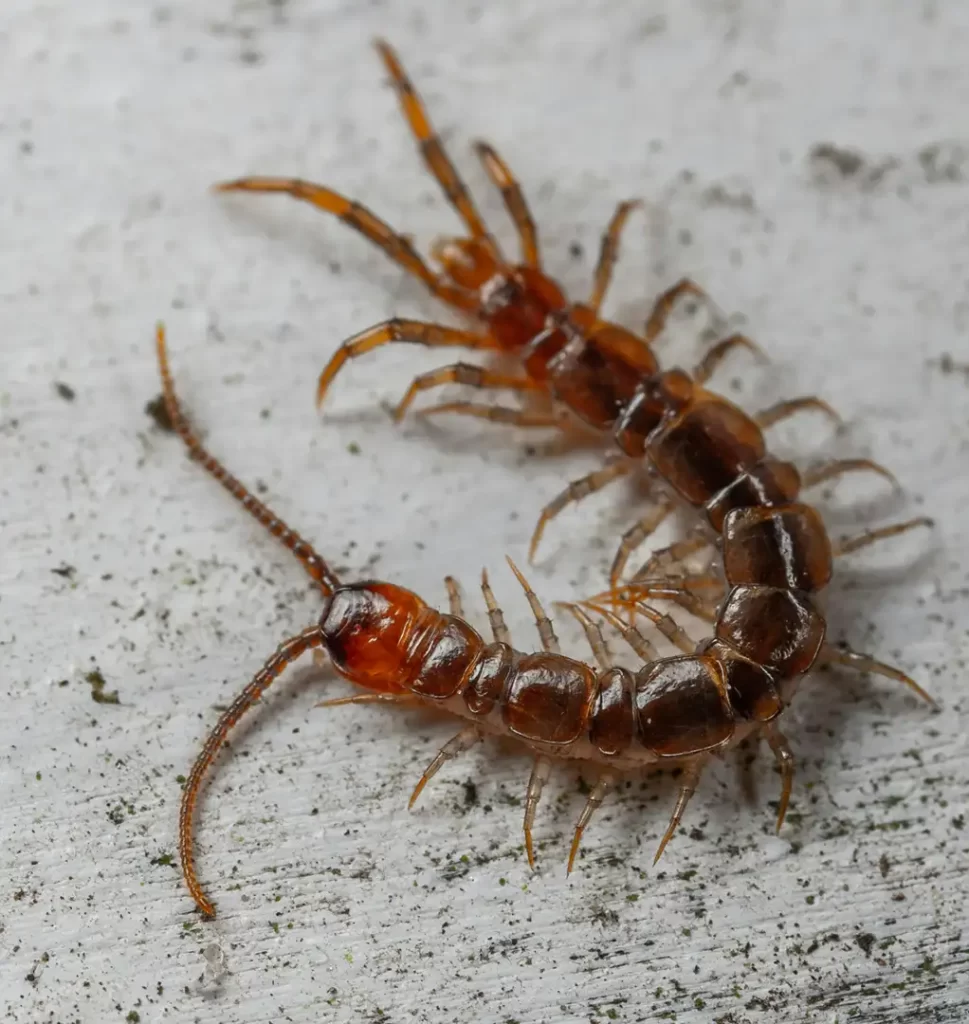
Cryptopid centipedes are small to medium-sized centipedes commonly found in Utah’s moist environments, such as leaf litter, soil, under rocks, and occasionally inside damp basements or crawl spaces. They typically measure 1 to 2 inches long and have a flattened, reddish-brown body with fewer legs per segment compared to other centipedes. Cryptopids are nocturnal predators that hunt small insects and other arthropods. While they can bite if handled roughly, their bite is usually mild and not medically significant. These centipedes prefer dark, humid areas and their presence indoors often signals excess moisture or nearby insect populations. Managing moisture and sealing entry points are effective ways to reduce their numbers inside homes.
Species of Millipedes
American Millipede
Narceus americanus
The American millipede is one of the largest and most recognizable millipede species found in Utah, reaching lengths of up to 4 inches. It has a long, cylindrical body with a hard, dark brown to black exoskeleton and numerous segments, each bearing two pairs of short legs. These millipedes are harmless detritivores, feeding on decaying leaves, wood, and organic matter, and are beneficial in the ecosystem for recycling nutrients into the soil. However, during periods of heavy rain or drought, they may migrate in large numbers and occasionally enter homes, basements, or garages in search of drier or moister conditions. While they do not bite or sting, they can become a nuisance in large numbers and may release a mild, unpleasant-smelling defensive fluid if handled. Keeping outdoor areas free of excess mulch, leaf litter, and moisture helps reduce their presence near buildings.
Flat-backed Millipedes
Family Polydesmidae
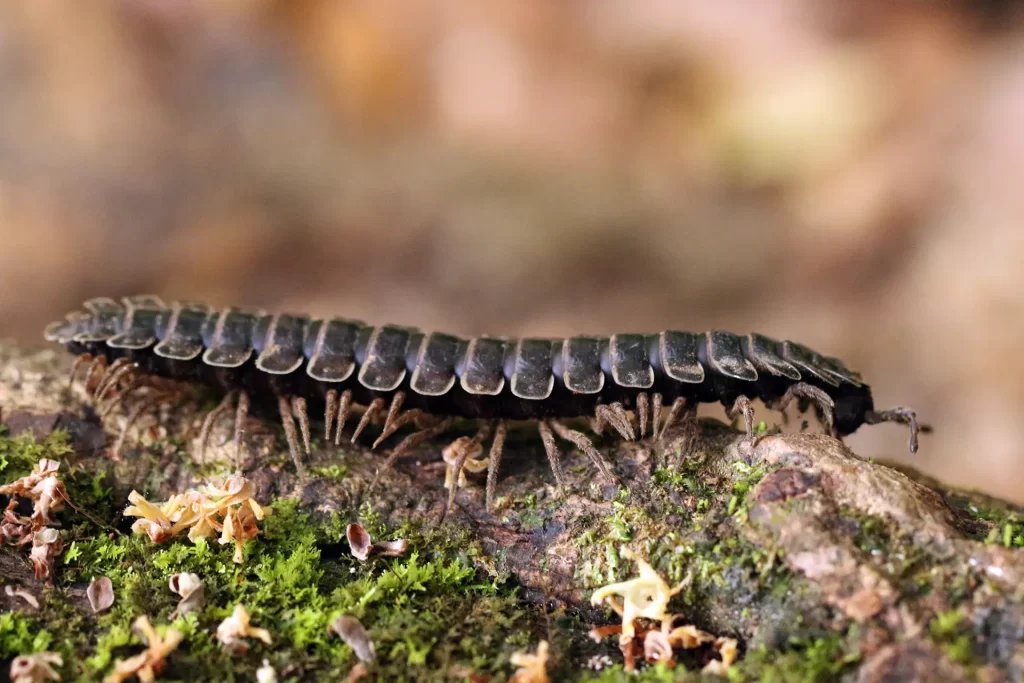
Flat-backed millipedes (family Polydesmidae) are common millipede pests in Utah, easily recognized by their flattened bodies with broad, segmented plates that extend outward from each side, giving them a distinct “armored” appearance. They are usually dark brown or black, ranging from ½ to 1½ inches long, and are commonly found in moist environments such as under mulch, rocks, leaf litter, and logs. These millipedes are harmless decomposers, feeding on decaying plant matter and contributing to soil health. However, during wet weather, dry spells, or seasonal changes, they may migrate and accidentally enter homes, especially through cracks in foundations or basement windows. While they do not bite or damage property, they can become a nuisance in large numbers and may emit a foul-smelling defensive fluid when disturbed. Managing outdoor moisture, reducing organic debris near foundations, and sealing entry points can help prevent infestations.
Julid Millipedes
Family Julidae
Julid millipedes (family Julidae) are common in Utah and are known for their smooth, slender, cylindrical bodies that typically range from 1 to 2 inches long. They are usually dark brown to black and have numerous tightly packed body segments, each with two pairs of short legs, giving them a slow, graceful movement. Julid millipedes thrive in moist, shaded environments like garden beds, compost piles, under stones, or within mulch, where they feed on decaying organic material. While they are harmless to humans and beneficial to soil health, they may become a nuisance pest when they migrate into basements, garages, or ground-level rooms—especially during periods of excessive moisture or drought. When disturbed, they may curl into a tight coil and can release a mild, musty-smelling fluid as a defense. Controlling humidity, sealing entry points, and reducing organic debris near foundations are effective strategies to limit indoor invasions.
Black Millipede
Orthoporus ornatus
The black millipede (Orthoporus ornatus), also known as the desert millipede, is a common species found in Utah’s drier, more arid regions. It is a large, dark brown to black millipede that can grow up to 4 inches long, with a smooth, cylindrical body composed of many segments, each bearing two pairs of legs. Despite their intimidating size, black millipedes are harmless detritivores, feeding on decomposing plant material and contributing to soil health. They typically live under rocks, logs, or within desert soils, emerging after rains or during seasonal shifts. Occasionally, they may wander into homes or patios, especially if outdoor conditions become too dry or wet. When threatened, they may curl into a coil and release a mild defensive secretion with an unpleasant odor. Though not dangerous, they can be a nuisance in large numbers, and prevention involves reducing moisture near the home, sealing entry points, and minimizing organic debris near foundations.
Preventing centipede and millipede pests involves reducing moisture, eliminating shelter, and sealing entry points to your home. Here are the most effective prevention strategies:
1. Eliminate Moisture
Fix leaks around plumbing, appliances, and outdoor faucets.
Use dehumidifiers in basements, crawl spaces, and other damp areas.
Improve ventilation in bathrooms and under sinks.
Avoid overwatering lawns or gardens, and correct poor drainage around your foundation.
2. Reduce Outdoor Harborage
Remove leaf litter, mulch, and grass clippings from around your home’s foundation.
Keep firewood and compost piles at least 20 feet away from the house.
Trim vegetation back from exterior walls to reduce humidity and shade.
3. Seal Entry Points
Caulk cracks and gaps around windows, doors, siding, vents, and utility pipes.
Install or repair door sweeps and weather stripping.
Use mesh screens over vents and crawl space openings.
4. Monitor and Clean Indoors
Vacuum regularly, especially in basements, garages, and bathrooms where moisture accumulates.
Check potted plants, boxes, or firewood before bringing them indoors.
Remove clutter that gives pests a place to hide.
5. Maintain Landscaping
Keep gutters and downspouts clean and functioning to direct water away from your foundation.
Maintain a dry barrier of gravel or stone around the home’s perimeter instead of dense mulch.
Millipedes and centipedes are most active after heavy rain or when outdoor conditions drive them indoors. Consistent moisture control and sealing are the best long-term solutions.
Have a Problem with Centipedes or Millipedes?
If you’re having a problem with centipedes or millipedes, we can help. Contact us today to get a quote for pest control services.