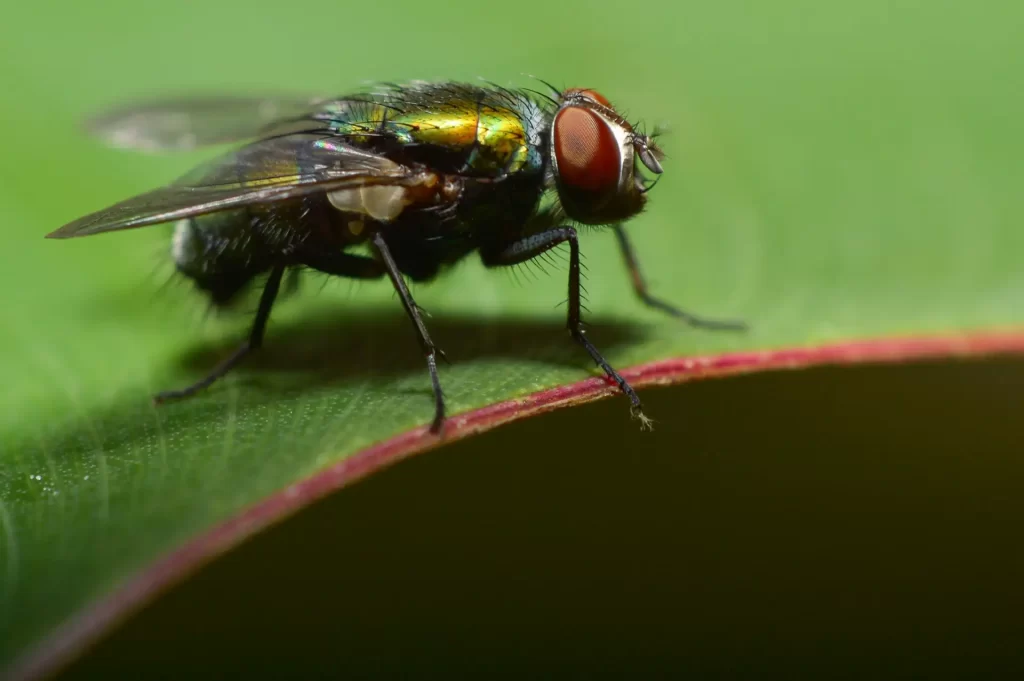
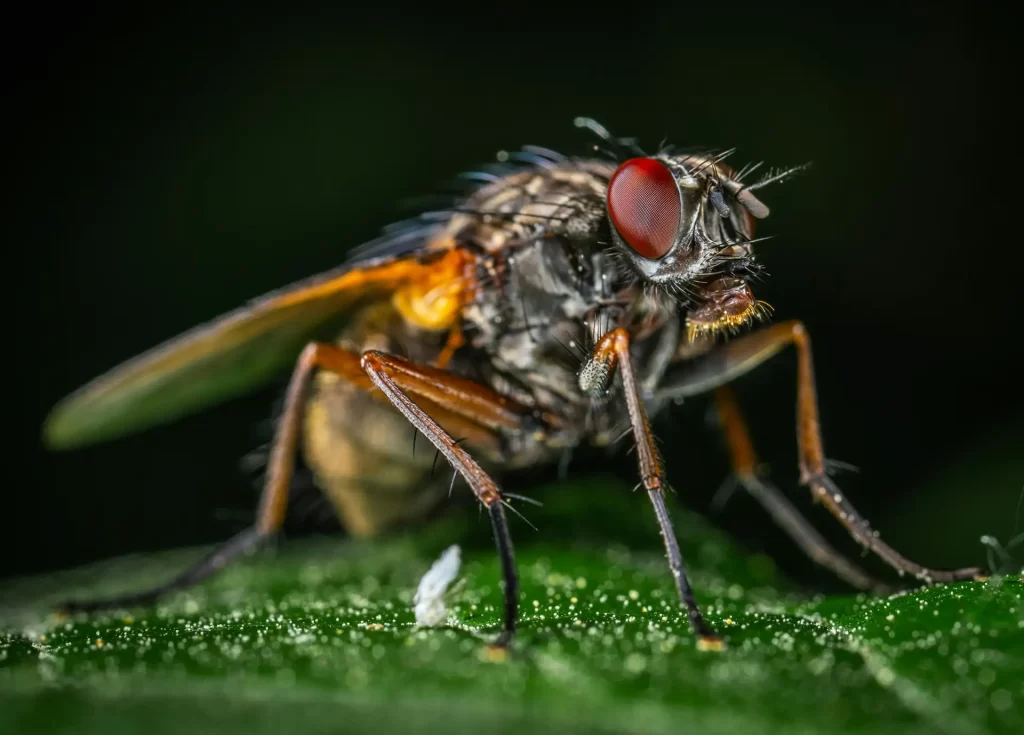
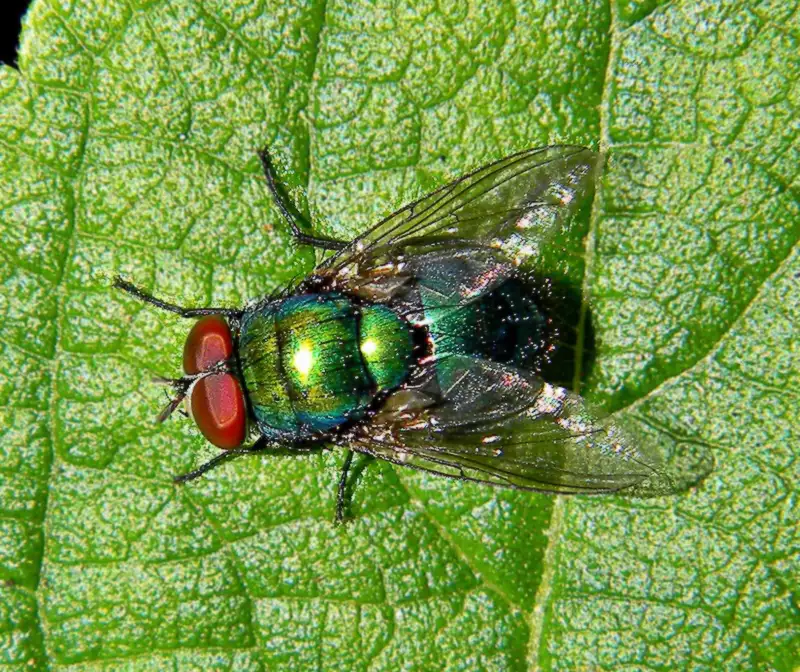
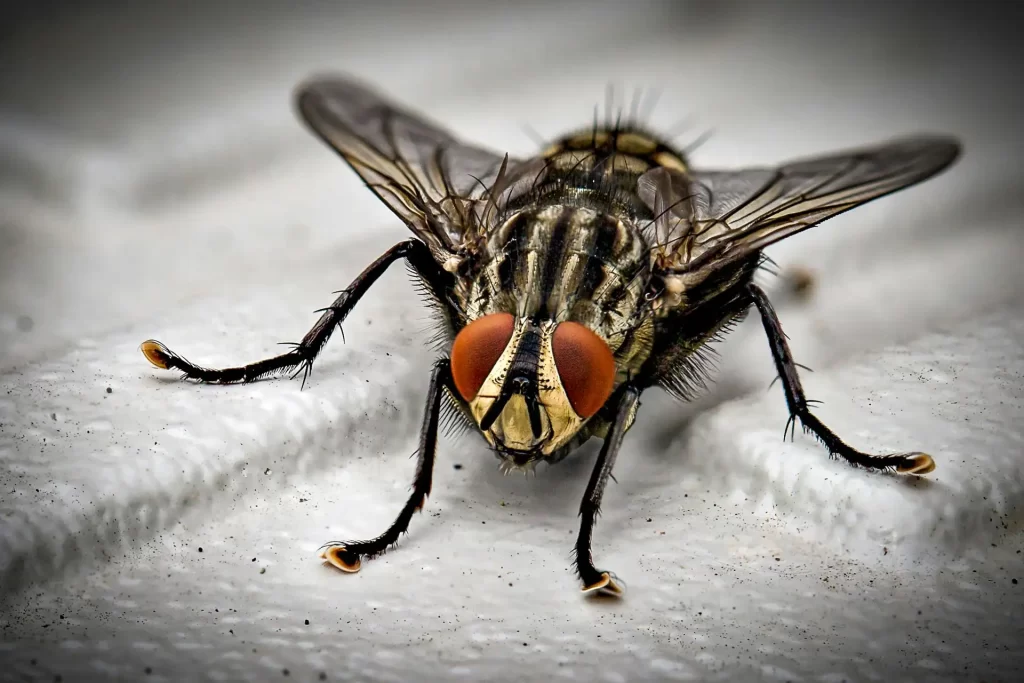
House fly pests include several fly species commonly found in and around homes in Utah, most notably the house fly, blow fly, flesh fly, fruit fly, and drain fly. These flies are typically attracted to food, moisture, waste, and decaying organic matter, making kitchens, garbage bins, drains, and pet areas frequent hotspots for activity. While some, like fruit flies and drain flies, are mainly nuisance pests, others—such as house flies, blow flies, and flesh flies—can pose health risks by spreading bacteria and pathogens from unsanitary surfaces to food and living areas. Common signs of infestation include frequent sightings of adult flies, larvae (maggots) in decaying material, and an increase in activity around drains, trash, or fruit. Prevention and control rely heavily on proper sanitation, eliminating breeding sites, sealing entry points, and using traps or targeted treatments when necessary.
Species of House Flies
House Fly
Musca domestica
The house fly is a common pest in Utah, easily identified by its grayish body, four dark stripes on the thorax, and large reddish eyes. Measuring about 1/4 inch long, house flies are strong fliers that breed in decaying organic matter such as garbage, manure, and rotting food. While they do not bite, they are a significant sanitary concern, capable of spreading bacteria, viruses, and parasites as they move between waste and human food or surfaces. They are often found around homes, farms, and restaurants, especially where hygiene is poor. Preventing infestations involves keeping indoor and outdoor areas clean, covering food and trash, sealing entry points, and using traps or targeted insecticides when necessary.
Blow Fly
Calliphoridae family
Blow flies are common pests in Utah, easily recognized by their metallic green, blue, or bronze bodies and loud, buzzing flight. Slightly larger than house flies, they are often among the first insects to appear around animal carcasses, garbage, or decaying organic matter, where they lay eggs that hatch into maggots. Blow flies are considered filth pests and potential health risks because they can carry and transmit bacteria and other pathogens picked up from contaminated surfaces. While they play a role in decomposition outdoors, their presence indoors usually signals a dead rodent or decaying material nearby. Preventing infestations involves proper sanitation, promptly removing pet waste or dead animals, securing garbage, and sealing entry points to keep them out of homes and businesses.
Flesh Fly
Sarcophagidae family
Flesh flies are medium to large-sized pests found throughout Utah, typically identified by their gray bodies with black longitudinal stripes on the thorax and often a checkered abdomen. These flies are drawn to decaying meat, garbage, feces, and animal carcasses, where they deposit live larvae (maggots) rather than laying eggs—a trait that sets them apart from many other fly species. Flesh flies can become a sanitation and health concern, as they may transmit bacteria and pathogens picked up from contaminated sources. While they are more commonly found outdoors, their presence indoors may indicate a hidden source of decay, such as a dead rodent or improperly stored meat. Good hygiene, waste management, and sealing entry points are key to preventing infestations.
Fruit Fly
Drosophila melanogaster
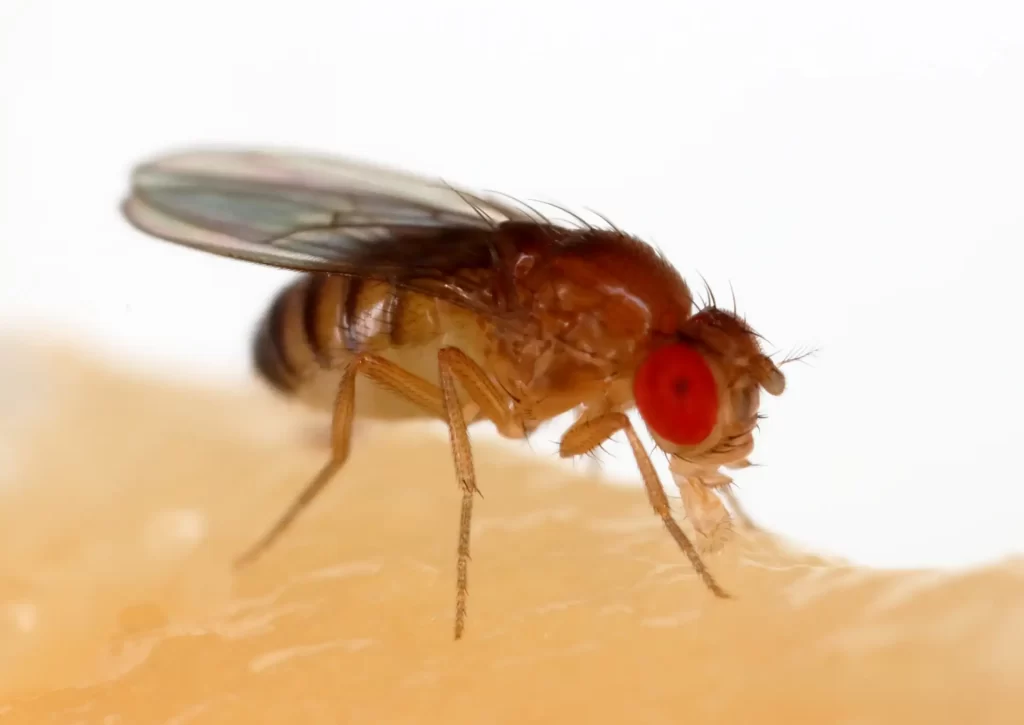
Fruit flies are small but persistent pests commonly found in Utah homes, especially in kitchens and areas where food is stored. They are about 1/8 inch long, with tan or yellow-brown bodies, bright red eyes, and clear wings. Fruit flies are attracted to ripening or rotting fruits and vegetables, as well as fermenting liquids, drains, garbage disposals, and spilled sugary drinks. Though harmless to humans, they reproduce rapidly, laying hundreds of eggs on moist organic matter, which can lead to quick infestations if not addressed. Preventing fruit flies involves keeping counters and trash areas clean, storing produce in the fridge, and cleaning drains regularly to eliminate breeding grounds.
Drain Fly
Psychodidae family
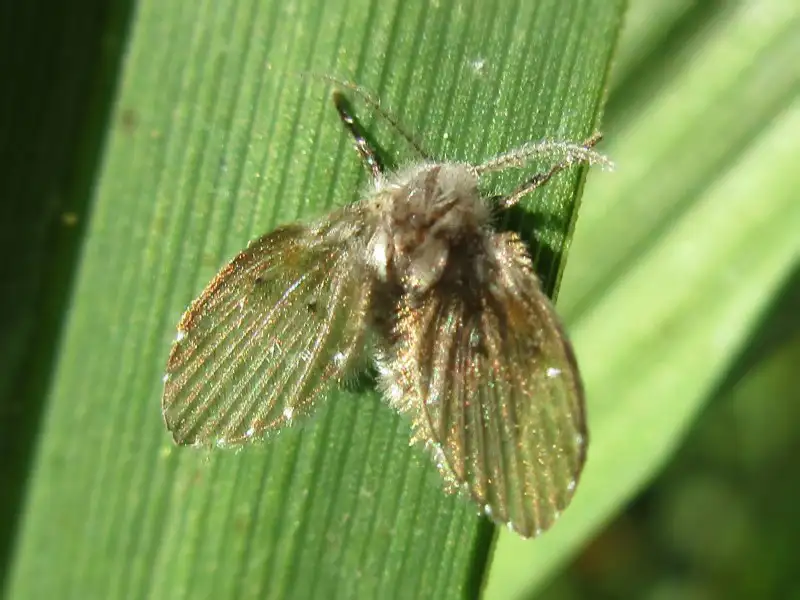
Drain flies, also known as moth flies, are small, fuzzy pests commonly found in Utah homes, especially around sinks, showers, drains, and other damp areas. Measuring about 1/8 inch long, they have gray or tan bodies, rounded wings covered in fine hairs, and a moth-like appearance. Drain flies breed in the organic sludge and biofilm that builds up inside drain pipes and plumbing, making bathrooms, kitchens, and basements common hotspots. While they are harmless to humans and do not bite or transmit disease, their sudden appearance in large numbers can be a nuisance. Effective control includes cleaning drains thoroughly, using enzyme-based cleaners to break down buildup, and improving ventilation to reduce moisture.