Beetles can be destructive pests in both homes and gardens, with thousands of species capable of causing damage depending on their habits. Indoors, common pest beetles like carpet beetles, pantry beetles, or powderpost beetles can infest stored food, fabrics, or even wood structures, chewing through grains, wool, and wooden surfaces. Outdoors, beetles such as Japanese beetles or elm leaf beetles feed on plant leaves, flowers, and roots, often leading to unsightly damage or stunted plant growth. While some beetles are beneficial (like ladybugs), pest species can be persistent, reproduce quickly, and may require targeted treatment to fully eliminate. Identifying the type of beetle is key to effective control and prevention.
Species of Beetles
Carpet Beetles
Anthrenus & Attagenus species
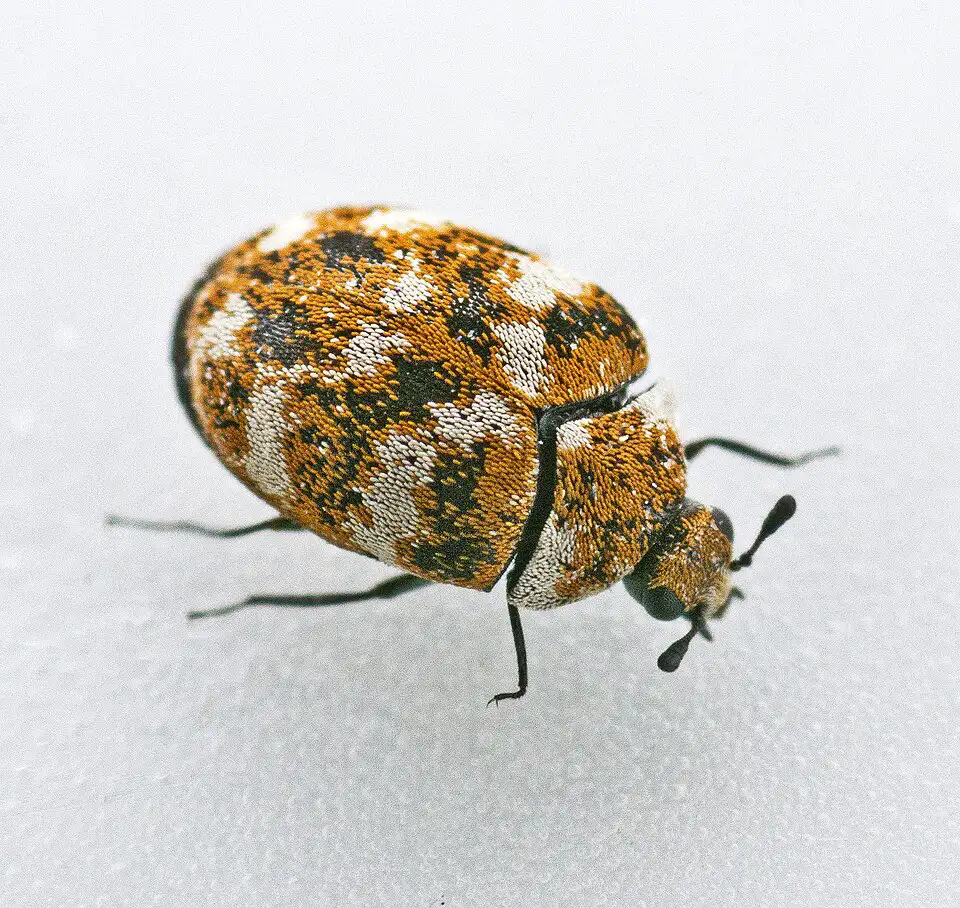
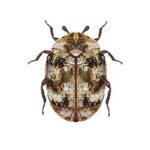
Carpet beetles are small, oval-shaped insects that are common household pests, especially in homes with natural fibers. Adult carpet beetles are usually black or mottled with white, brown, or yellow patterns and measure about 1/8 inch long. While the adults feed on pollen and are often found near windows, it’s the larvae—small, hairy, and carrot-shaped—that cause damage by feeding on organic materials like wool, silk, leather, feathers, and even pet hair. Infestations often go unnoticed until damage appears in clothing, rugs, or upholstery. Carpet beetles are persistent and can spread throughout a home, making early detection and thorough cleaning essential for control.
Powderpost Beetles
Lyctidae and Anobiidae families
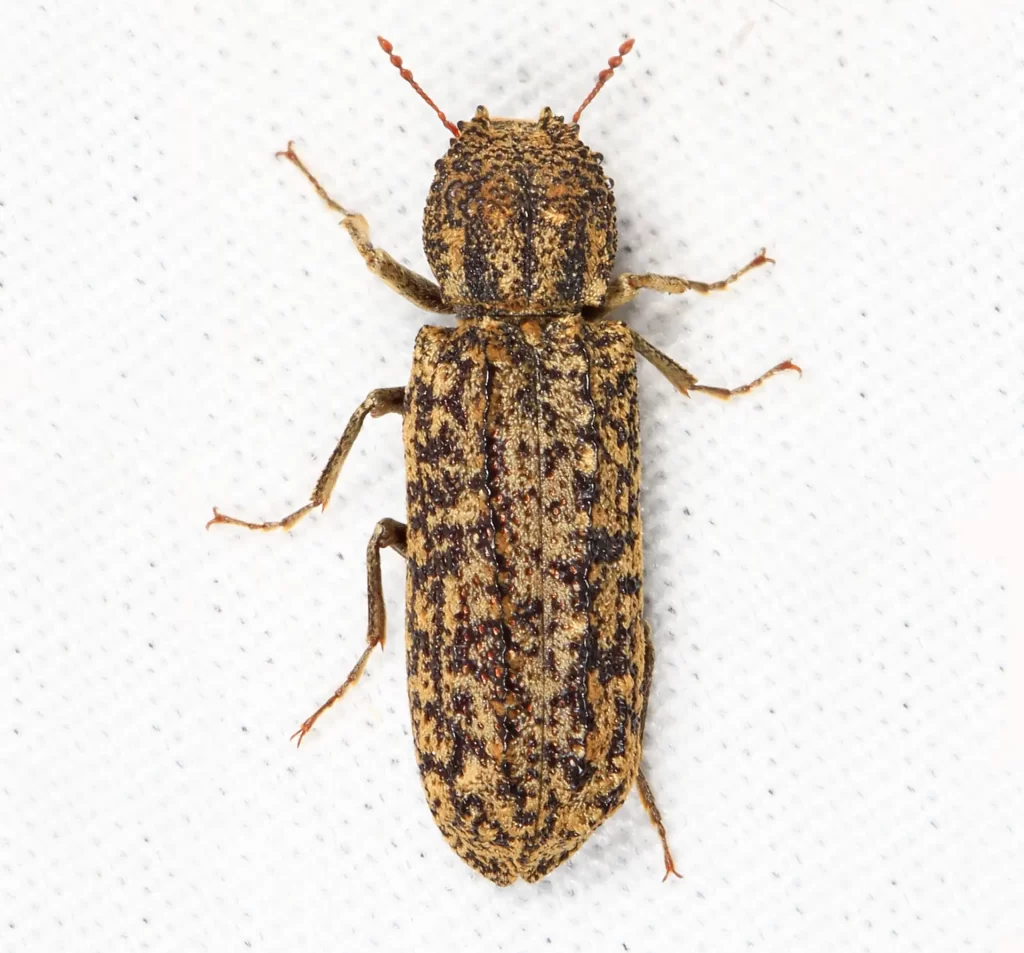
Powderpost beetles are wood-destroying pests known for infesting and damaging dry, seasoned wood in homes and buildings. These beetles are small—usually between 1/8 and 1/4 inch long—with reddish-brown to black, narrow, and flattened bodies. The real damage is done by the larvae, which tunnel through wood as they feed, leaving behind a fine, powdery dust (called frass) and small, round exit holes on the surface. Commonly affected materials include hardwood flooring, baseboards, furniture, and wooden structural elements. Infestations can go unnoticed for years until visible signs appear, and severe damage may compromise the integrity of the wood. Professional inspection is often needed to confirm active infestation and determine the best treatment method.
Drugstore Beetles
Stegobium paniceum
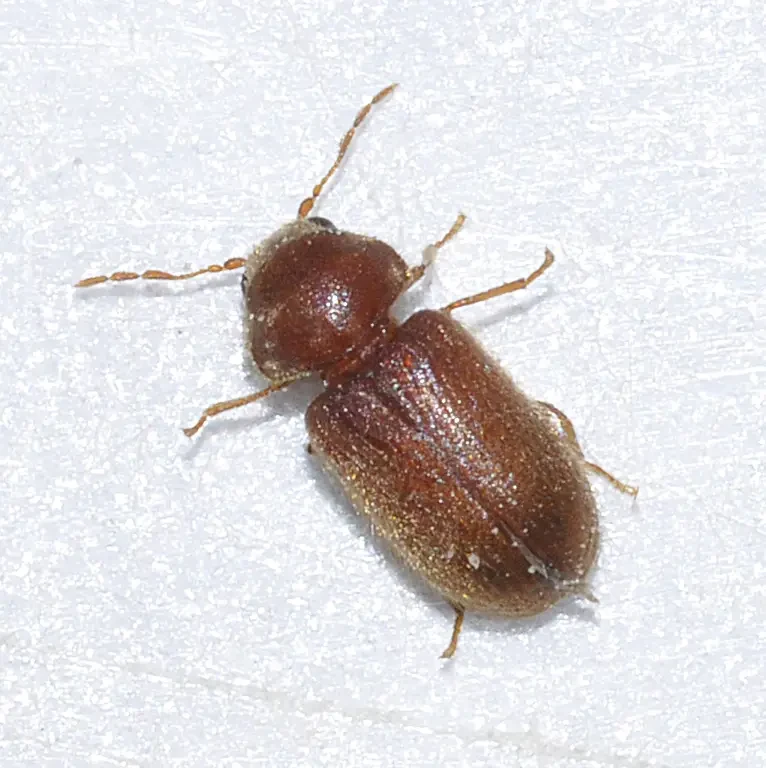
The drugstore beetle is a small, reddish-brown beetle about 1/10 to 1/8 inch long, known for its humpbacked appearance and ability to infest a wide range of stored products. Despite its name, it doesn’t just target pharmaceuticals—it feeds on flour, spices, dry pet food, cereal, and even non-food items like books, leather, and dried flowers. These beetles can chew through packaging, making them particularly difficult to control once established. They are often mistaken for cigarette beetles but can be identified by the fine lines running down their wing covers. While they don’t pose a health risk, drugstore beetles are persistent and can quickly spread throughout pantries or storage areas if not addressed promptly.
Grain & Flour Beetles
Tribolium & Oryzaephilus species
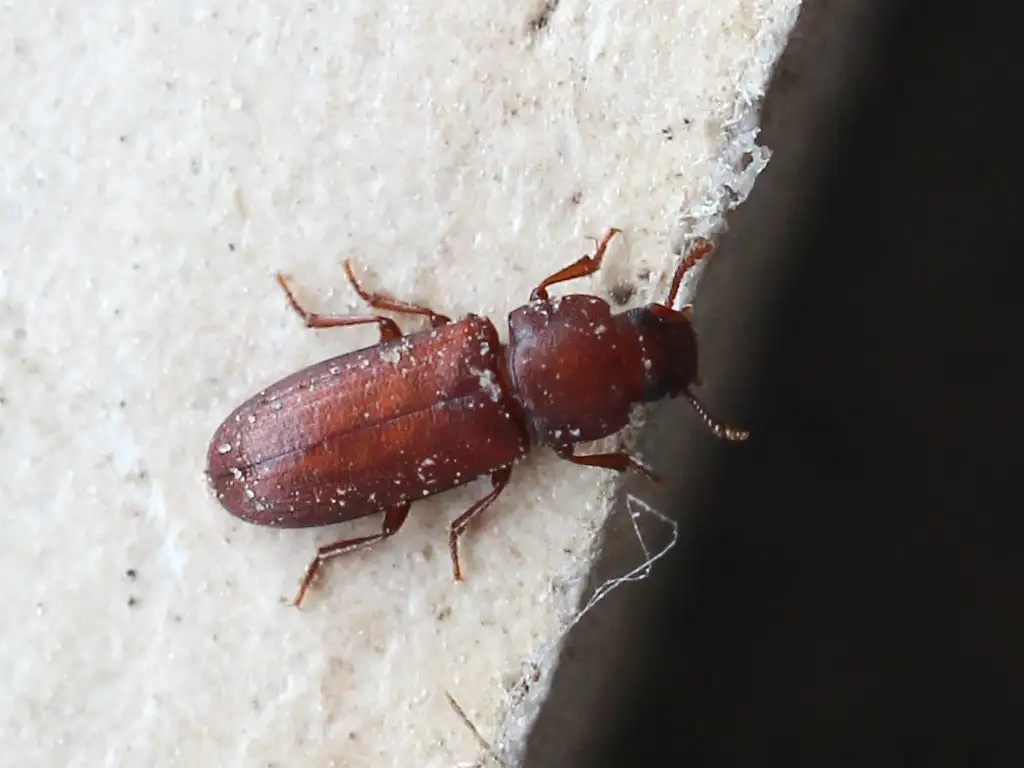
Grain and flour beetles are small, persistent pantry pests that infest a wide variety of dry, stored food products. Common species include the red flour beetle (Tribolium castaneum) and the sawtoothed grain beetle (Oryzaephilus surinamensis). These beetles are typically reddish-brown to dark brown and range from 1/10 to 1/8 inch in length. They often infest flour, cereals, rice, pasta, nuts, dried fruit, and pet food. Sawtoothed grain beetles are easily identified by the “saw-like” projections on the sides of their thorax. While they don’t bite or spread disease, their presence contaminates food, making it inedible. Infestations usually start from bringing in already-infested products, and effective control involves discarding contaminated goods and thoroughly cleaning storage areas.
Elm Leaf Beetles
Xanthogaleruca luteola
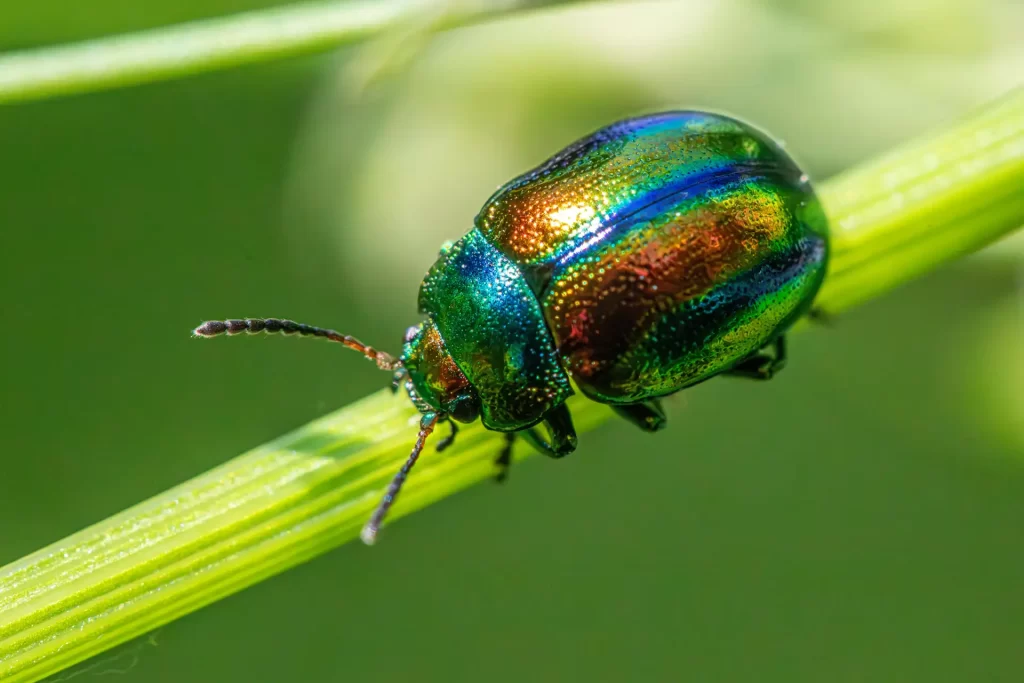
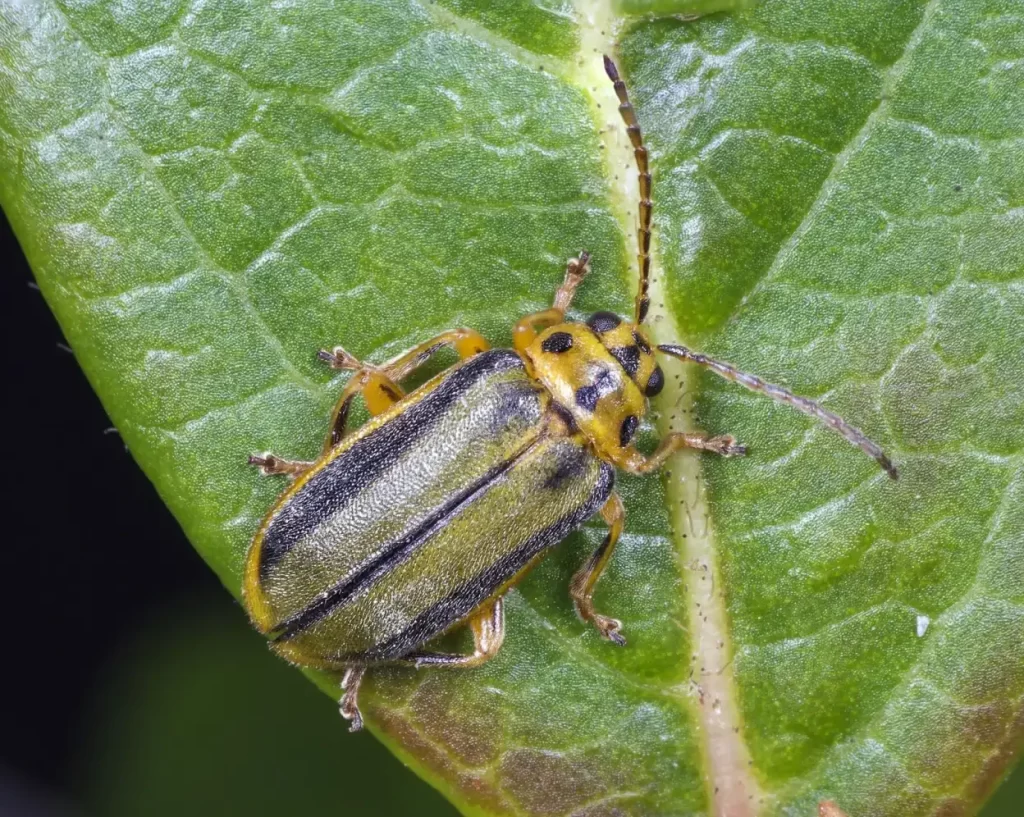
Elm leaf beetles (or “elm bugs”) are destructive tree pests commonly found in Utah that primarily target elm trees. Adult beetles are small—about 1/4 inch long—with yellow-green bodies and distinctive dark stripes running down their back. Both adults and larvae feed on elm leaves, skeletonizing the foliage by eating the tissue between the veins, which causes the leaves to dry out, turn brown, and fall prematurely. Repeated infestations can weaken trees, making them more vulnerable to disease and other pests. Elm leaf beetles often overwinter in buildings or protected outdoor areas, emerging in spring to begin feeding and laying eggs. Management typically involves monitoring trees, using insecticides when necessary, and removing infested leaves or overwintering beetles.
Japanese Beetles
Popillia japonica
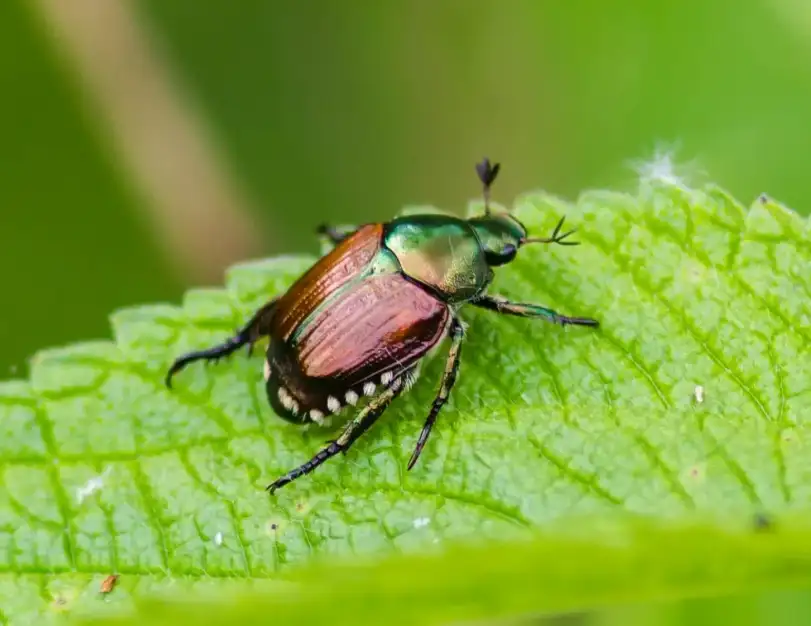
Japanese beetles are invasive, highly destructive pests that are an emerging concern in parts of Utah. These beetles are easily recognized by their metallic green bodies and copper-colored wing covers, measuring about 1/2 inch in length. Adult Japanese beetles feed on the leaves, flowers, and fruit of over 300 plant species—including roses, grapes, fruit trees, and vegetables—skeletonizing foliage and causing significant damage to landscapes and gardens. Their larvae, known as grubs, live in the soil and feed on grass roots, leading to brown patches and weakened lawns. While not yet widespread in Utah, their presence is growing, and early detection and control are crucial to prevent them from becoming a major regional pest.
Blister Beetles
Epicauta species
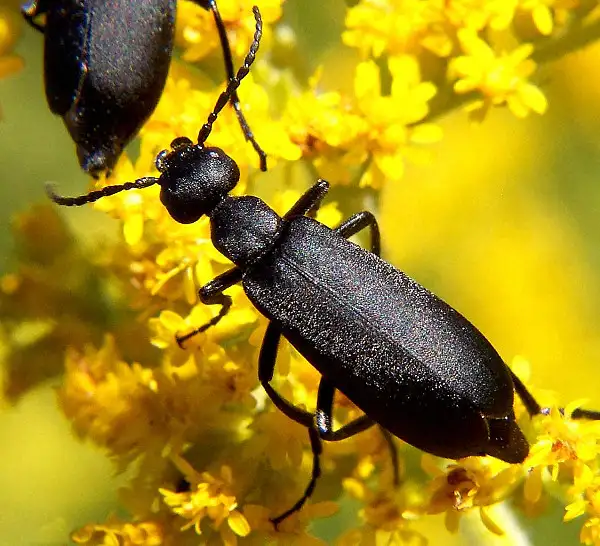
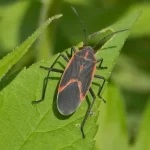
Blister beetles are slender, soft-bodied insects commonly found in Utah’s agricultural and garden environments. They vary in color—often gray, black, or striped—and range from 1/2 to 1 inch long. These beetles get their name from the chemical cantharidin, a toxic compound they release when crushed or threatened, which can cause painful blisters on human skin and is highly toxic to livestock, especially horses, if ingested in contaminated hay. While adult blister beetles feed on the leaves and flowers of crops like alfalfa, tomatoes, potatoes, and beans, their larvae are actually beneficial predators of grasshopper eggs. Despite their dual role in the ecosystem, their presence in forage crops and vegetable gardens makes them a concern for both farmers and home gardeners.
Bark Beetles
Dendroctonus, Ips species
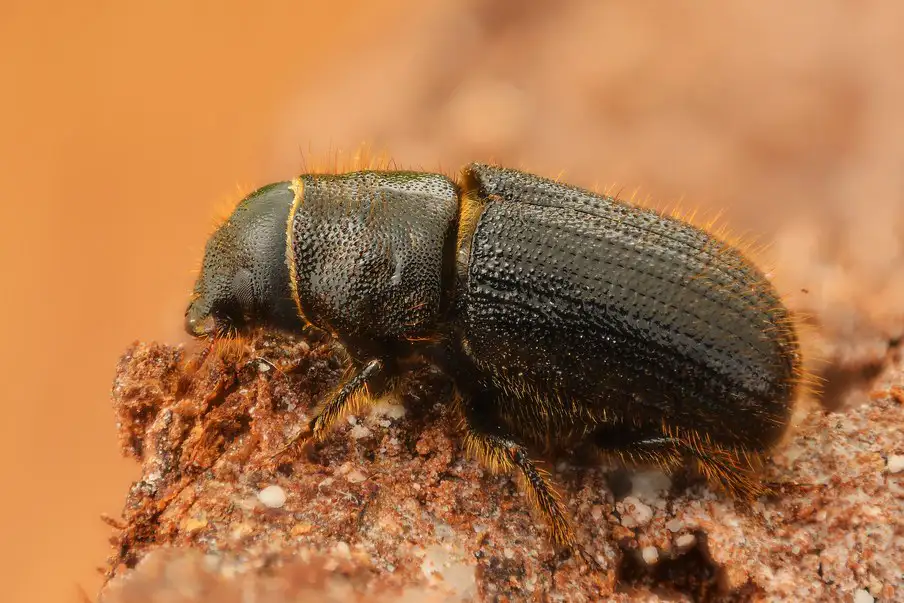
Bark beetles are small, wood-boring insects that pose a serious threat to Utah’s forests, especially coniferous trees like pines, spruces, and firs. These beetles are typically only 1/8 to 1/4 inch long, but they can cause massive damage by tunneling under the bark to lay their eggs, disrupting the flow of water and nutrients in the tree. Infested trees often show signs such as reddish-brown boring dust, pitch tubes (small sap masses on the trunk), and needle discoloration or dieback. Bark beetle outbreaks are often triggered by drought, wildfire damage, or overstocked forests, which weaken trees and make them more vulnerable. In large numbers, bark beetles can kill entire stands of trees, making them one of the most destructive forest pests in Utah and across the western U.S.