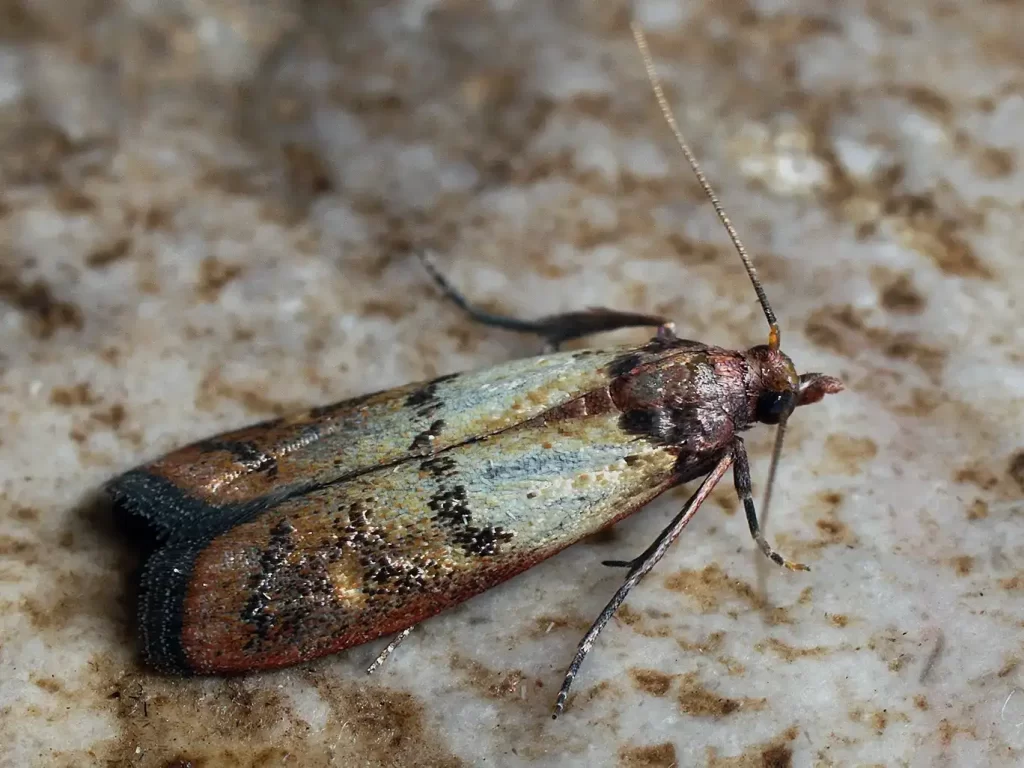
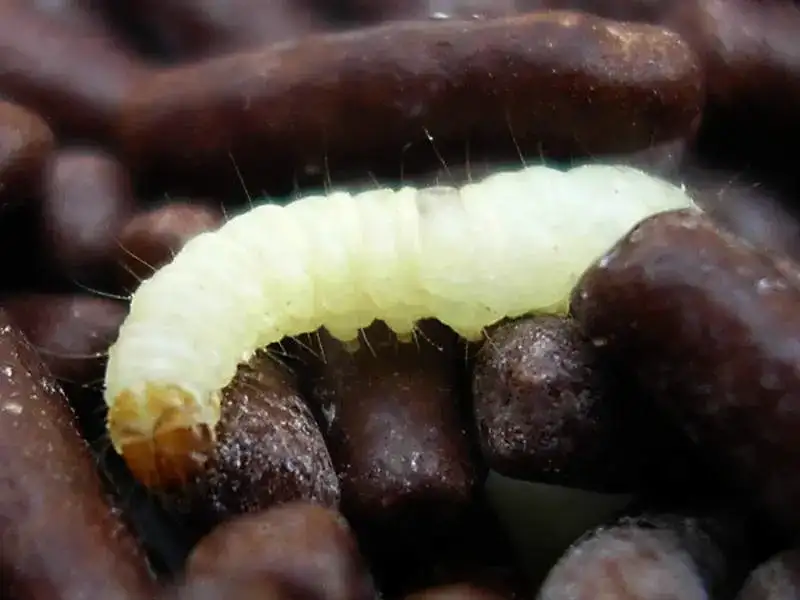
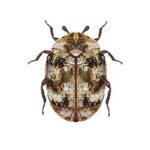
Pantry moths, also known as Indian meal moths (Plodia interpunctella), are common household pests that infest dry food products and stored goods. Adult moths are small, about ½ inch long, with distinctive two-toned wings—pale gray near the head and coppery or reddish-brown at the tips. While the adults don’t feed, the real damage is done by their larvae (tiny cream-colored caterpillars), which burrow into and contaminate foods like flour, grains, rice, cereal, nuts, dried fruit, pet food, and even spices. Infestations often begin when contaminated products are brought home from the store. As larvae develop, they leave behind webbing, droppings, and shed skins, making food unfit to eat. Pantry moths can spread quickly and be difficult to eliminate without discarding infested items, cleaning thoroughly, and sealing all food in airtight containers to prevent reinfestation.
What are the Signs of Pantry Moths?
Webbing in Food Packages
A telltale sign of pantry moth larvae is silky webbing inside or around food packaging. This webbing often causes food to clump together unnaturally, especially in flour, rice, and cereal.
Live Larvae or Caterpillars
Small, cream-colored or light brown larvae (⅜ inch long) may be seen crawling inside food containers, on shelves, or along pantry walls. These are the feeding stage of the moth and cause the actual damage.
Flying Adult Males
You may notice small moths (½ inch long) flying in the kitchen, pantry, or near lights. They have distinctive two-toned wings—gray in front and reddish-brown or copper at the back.
Cocoons or Pupae
Look for small silken cocoons in the corners of shelves, ceiling corners, or inside packaging. These are where larvae transform into adult moths.
Damaged or Contaminated Food
Infested food may have a musty odor, visible clumps, powdery residue, or signs of insect droppings or shed skins.
Preventing pantry moths involves keeping your kitchen clean, food well-sealed, and regularly inspecting for early signs of infestation. Here are some effective prevention methods:
1. Store Food Properly
Use airtight containers (glass, metal, or thick plastic) for all dry goods like flour, cereal, pasta, nuts, and pet food.
Avoid keeping food in original packaging like cardboard or thin plastic bags, which larvae can chew through.
2. Keep the Pantry Clean
Regularly clean shelves and corners to remove crumbs, spills, or old food debris.
Vacuum pantry crevices where eggs or larvae may hide, then discard the vacuum contents outside.
Wipe down surfaces with white vinegar or mild soap to sanitize.
3. Inspect Food Before Storing
Check dry goods (especially grains and nuts) for signs of webbing, clumping, or tiny larvae before bringing them home.
Avoid buying damaged or expired food packages.
Freeze bulk grains or flour for 3–5 days after purchase to kill any hidden eggs or larvae.
4. Use Natural Deterrents
Place bay leaves, cloves, or dried rosemary in pantry corners or containers—these herbs may repel moths.
Use pheromone traps to monitor and control any adult moth activity.
5. Act Quickly if You See Signs
At the first sign of moths or larvae, discard infested food, clean the entire pantry thoroughly, and monitor for reappearance.
Seal all entry points and cracks where moths could lay eggs or hide.
Have a Problem with Pantry Moths?
If you’re having a problem with pantry moths, we can help. Contact us today to get a quote for pest control services