What Makes Wolf Spiders So Noticeable?
If you’ve ever seen a large, fast-moving brown spider dart across your basement floor or garage wall, there’s a good chance it was a wolf spider. They’re common throughout Utah, especially in residential neighborhoods near open land, fields, or developing areas. Spiders become more active in spring due to warmer weather and increased pest activity.
Because of their size and speed, they look intimidating. The good news? Wolf spiders are not considered dangerous to most people in Utah.
That said, there’s more to the story.
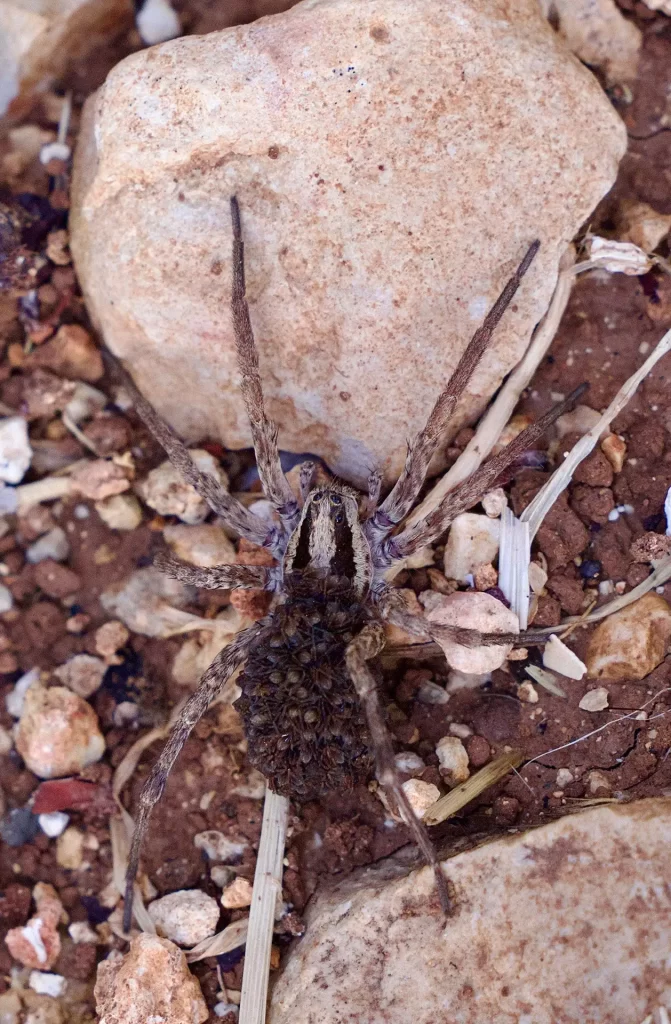
Wolf spiders get their name for their great hunting abilities. Unlike many spiders that build webs and wait for prey, wolf spiders actively roam in search of insects. That’s why homeowners usually see them instead of just finding webs.
In Utah homes, wolf spiders are most often found in:
- Basements
- Garages
- Window wells
- Ground-level rooms
- Around foundations and landscaping
We commonly see wolf spiders in Sandy and throughout the Wasatch Front, particularly in lower-elevation areas near the mountains and in environments with higher moisture levels, such as areas near lakes, rivers, streams, and ponds. Wolf spiders are less likely to be found in upper levels of buildings.
Identifying wolf spiders
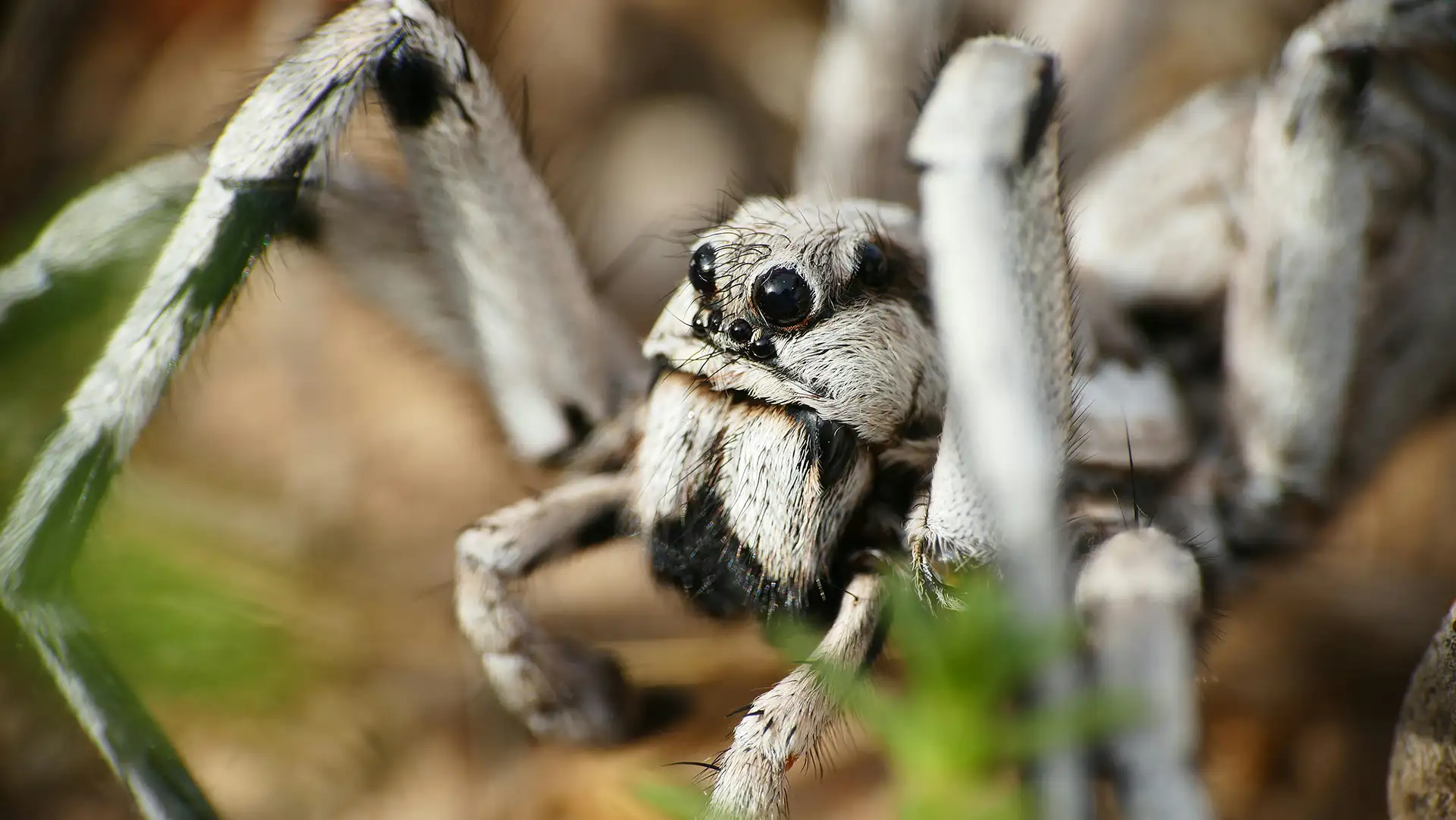
They’re typically brown or gray, somewhat hairy, and can grow up to about 1–2 inches including their legs. One unique trait is that females carry their egg sacs attached to their bodies — and after hatching, the baby spiders ride on the mother’s back. That alone can be alarming if you happen to spot it.
Are Wolf Spider Bites Dangerous?
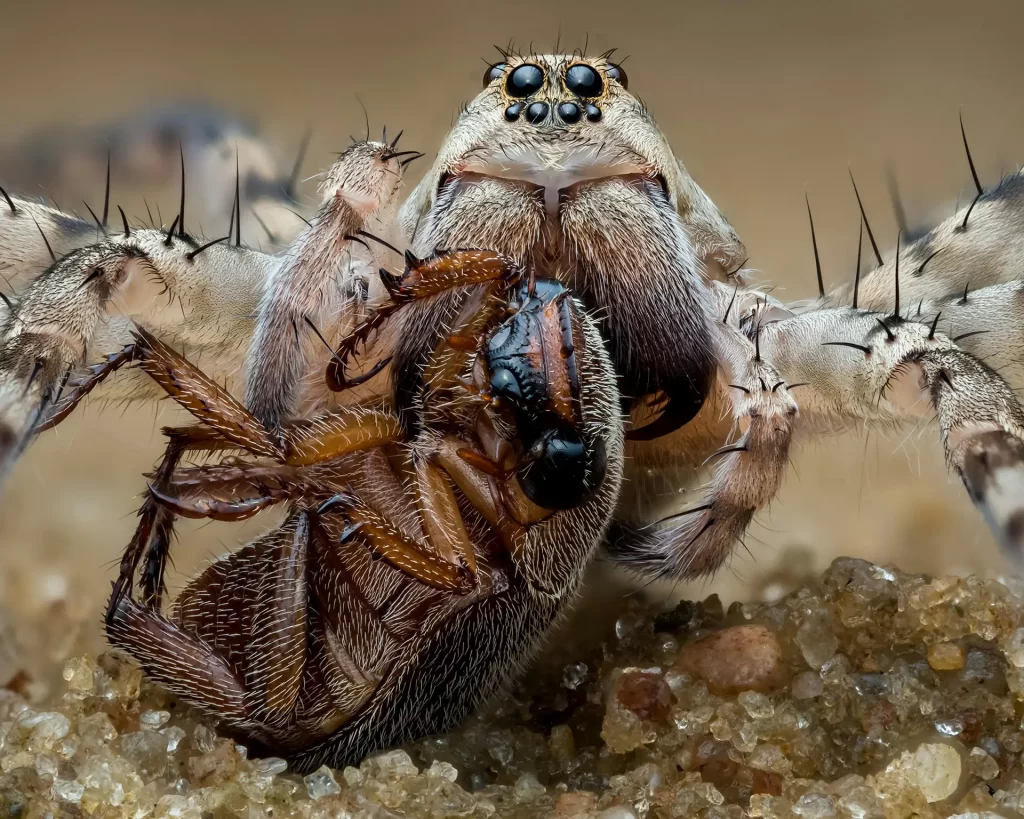
Technically, wolf spiders do have venom — almost all spiders do. But their venom is not medically significant to healthy adults.
Bites are uncommon and usually only happen if the spider is trapped against your skin. If someone is bitten, symptoms are typically mild and may include:
- Temporary redness
- Minor swelling
- Localized pain similar to a bee sting
Severe reactions are rare. In Utah, wolf spiders are not considered a high-risk species.
They are very different from the Black Widow Spider, which is also found in Utah and does have medically significant venom. Black widows are glossy black with a red hourglass marking — a clear visual difference from the brown, hairy wolf spider.
If you’re unsure which spider you’re seeing, proper identification matters.
Learn about Utah Spiders
See our pest library for common spiders in Utah and how to identify them.
Why Are Wolf Spiders Coming into Your House?
1. They’re hunting
2. Seasonal changes drive movement
In the fall especially, spiders seek warmth and shelter. Utah’s temperature swings can push them indoors quickly.
3. Access points
Homes commonly have small openings around:
- Foundation cracks
- Garage door seals
- Window wells
- Door thresholds
- Utility line entries
Even small gaps are enough.
If you’re seeing them repeatedly, it’s often less about the spider itself and more about what’s attracting them.
Are Wolf Spiders Good to Have Around?
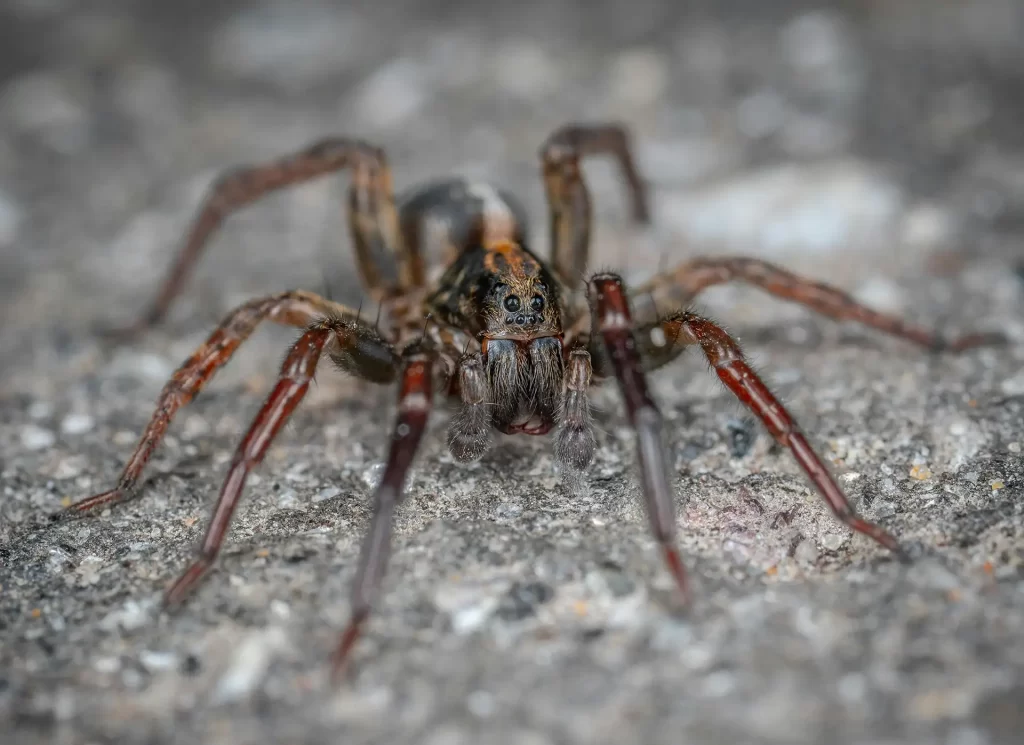
Outdoors, they’re actually beneficial. They help control insect populations naturally and are part of the ecosystem.
Indoors, however, most homeowners would rather not share space with a large hunting spider. Beyond the discomfort factor…
Frequent sightings can indicate:
- An underlying insect issue
- Entry points around the home
- Conditions that are conducive to pests
Spiders rarely show up without a reason
It’s good to note that lawn fertilization can potentially have the effect of increasing spider populations, but it’s important to understand why. Here at Agent Pest Control, we used to provide lawn fertilization services to homes in the Salt Lake County area, and typically observed an increase in spider populations among our customers. Fertilizers are rich in nitrogen and phosphorus, which helps your grass to grow, but also becomes a prime breeding ground for insects. The more insects, the more food for spiders. So if you’re seeing an increase in spiders after fertilizing your lawn, it may be an indication that your lawn also needs to be treated for other pests.
How to Reduce Wolf Spider Activity Around Your Home
The most effective approach focuses on prevention rather than reacting to individual spiders.
Start with Exclusion
- Seal cracks in the foundation.
- Install tight-fitting door sweeps.
- Repair damaged screens.
- Close gaps around utility penetrations.
Reduce Outdoor Harborage
- Keep woodpiles away from the structure.
- Trim shrubs back from siding.
- Clear debris from window wells.
- Reduce heavy mulch buildup near the foundation.
Finally, address the food source. Since wolf spiders hunt insects, controlling general pest activity significantly reduces spider presence. A professional exterior perimeter treatment can create a barrier that deters both insects and spiders from entering in the first place.
So, Are Wolf Spiders Dangerous in Utah?
For most people, no. Wolf spiders are not considered dangerous, and their bites are rare and typically mild.
However, seeing them inside your home is often a sign that something else is going on — whether it’s seasonal movement, small structural gaps, or an underlying insect issue.
If wolf spiders are becoming a regular sight in your Utah home, it may be worth addressing the root cause rather than just removing the occasional spider.
Frequently Asked Questions
Yes. Wolf spiders are very common throughout Utah, especially in residential areas near open land, fields, or new developments. They are most active during warmer months but are often seen indoors in the fall as temperatures drop.
Most wolf spiders in Utah range from about ½ inch to 2 inches in total leg span. Their size is one of the main reasons they alarm homeowners, even though they are not considered dangerous.
Wolf spider bites are rare and typically mild. If a bite occurs, symptoms may include redness, slight swelling, and temporary pain similar to a bee sting. Serious medical reactions are uncommon in healthy adults.
Basements and garages provide ideal conditions: shelter, cooler temperatures, and access to insects. If wolf spiders are appearing indoors, it often means there are insects present that are attracting them.
Outdoors, yes. They help control insect populations naturally. Indoors, however, most homeowners prefer to prevent them due to their size and sudden movements.
Want those Creepy Crawlers Gone?
Wolf spiders, while harmless, are often unsightly to many people. They are also an indication that you have a larger pest problem. Contact Agent Pest Control today and let our pest control experts rid your house of all your unwanted pests.