Cockroaches are resilient and unwelcome pests commonly found in homes, restaurants, and commercial buildings throughout Utah. These insects have flat, oval-shaped bodies, long antennae, and fast-moving legs, and they typically range in color from light brown to dark reddish-brown depending on the species. Cockroaches thrive in warm, moist environments, often hiding in kitchens, bathrooms, basements, and behind appliances, where they have access to food, water, and shelter. They are primarily nocturnal and may scatter when lights are turned on, which is often the first visible sign of an infestation.
Cockroaches are not only unsettling—they also pose serious health risks. They can spread bacteria, viruses, and parasites by contaminating food and surfaces with their saliva, droppings, and shed skin. Additionally, their presence can trigger allergies and asthma, especially in children. Because they reproduce rapidly and are highly adaptable, cockroach infestations can quickly get out of control, making early detection and professional pest control essential for effective elimination.
Species of Cockroaches
German Cockroach
Blattella germanica
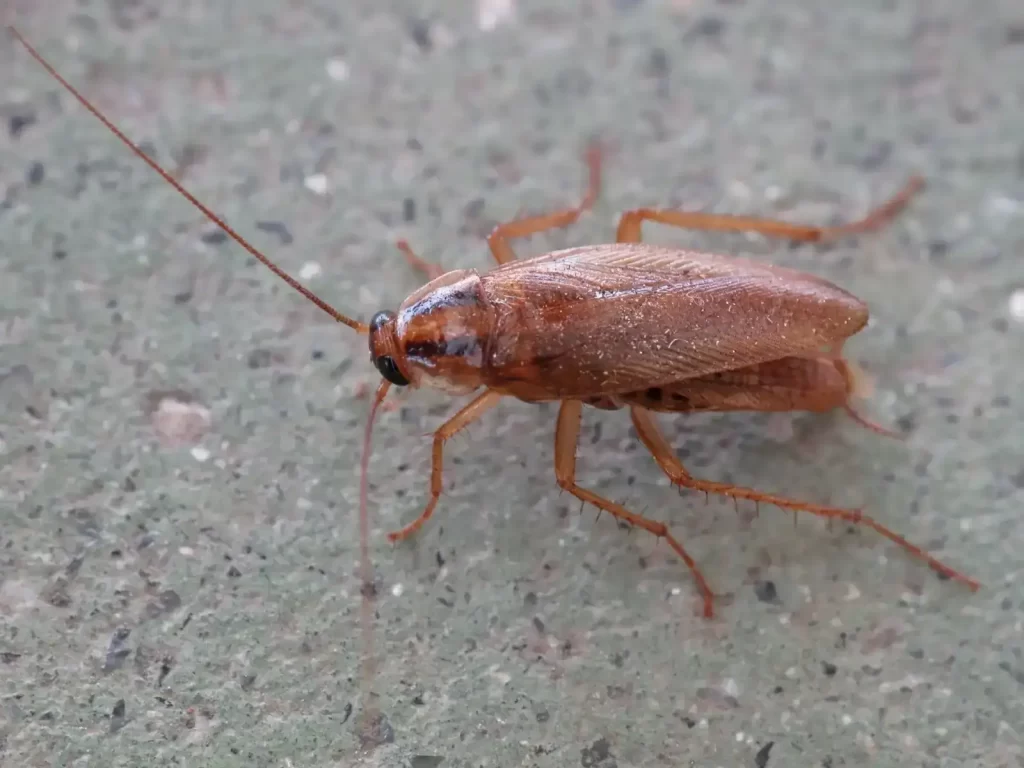
The German cockroach is one of the most common and persistent indoor pest species in Utah, especially in homes, apartments, and restaurants. Small and light brown, it measures about ½ inch long and is easily identified by two dark stripes running behind its head. These cockroaches thrive in warm, humid environments like kitchens and bathrooms, hiding in tight crevices near food and water sources. Known for their rapid reproduction, even a small infestation can quickly grow out of control. German cockroaches contaminate surfaces and food with their droppings and shed skin, and they are a known trigger for allergies and asthma, particularly in children. Their ability to hide and adapt makes them one of the most difficult cockroach species to eliminate without persistent, targeted treatment.
American Cockroach
Periplaneta americana
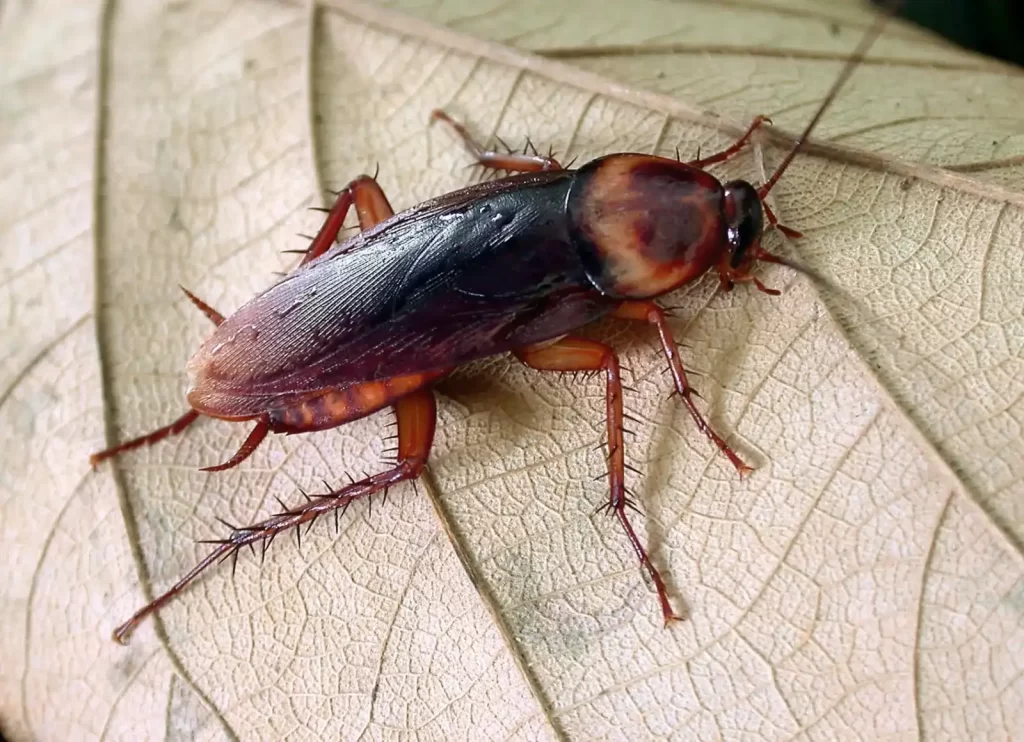
The American cockroach is one of the largest cockroach pests found in Utah, growing up to 1.5 to 2 inches long. Reddish-brown in color, it is easily recognized by a yellowish figure-8 pattern on the area behind its head. Unlike smaller indoor species, American cockroaches are more commonly found in damp, dark environments such as basements, crawl spaces, sewers, and drains, but they can also invade homes, especially through plumbing or during hot, dry weather. Though slower to infest than German cockroaches, they can still pose significant problems by contaminating food, spreading bacteria, and producing allergens. Their large size and sudden movements often make them especially alarming to homeowners, and professional pest control is typically needed to fully eliminate them from a structure.
Oriental Cockroach
Blatta orientalis
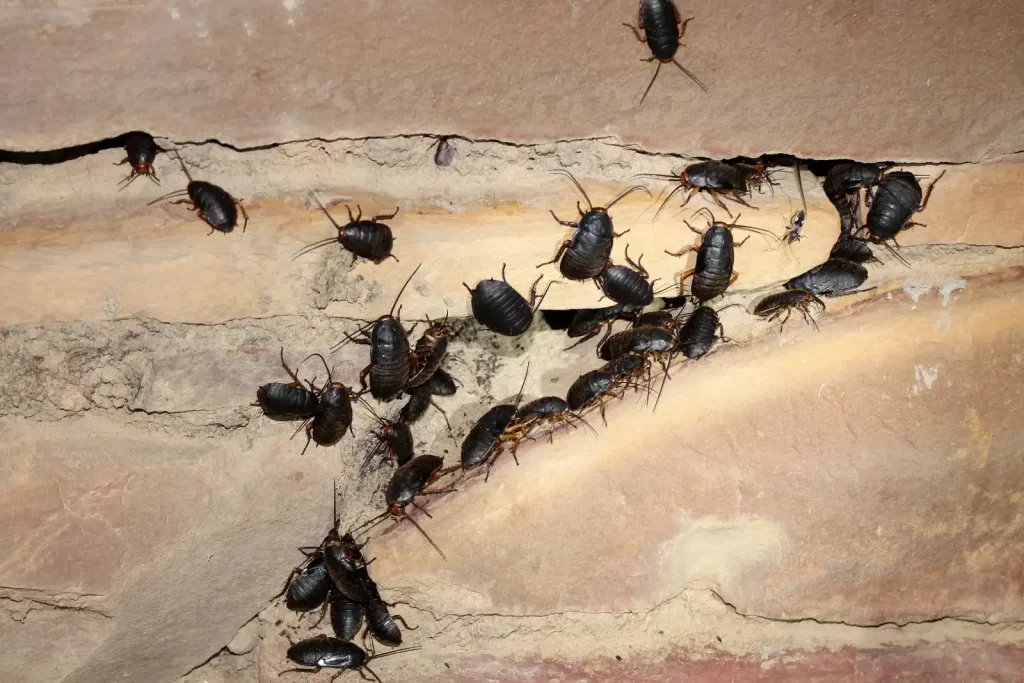
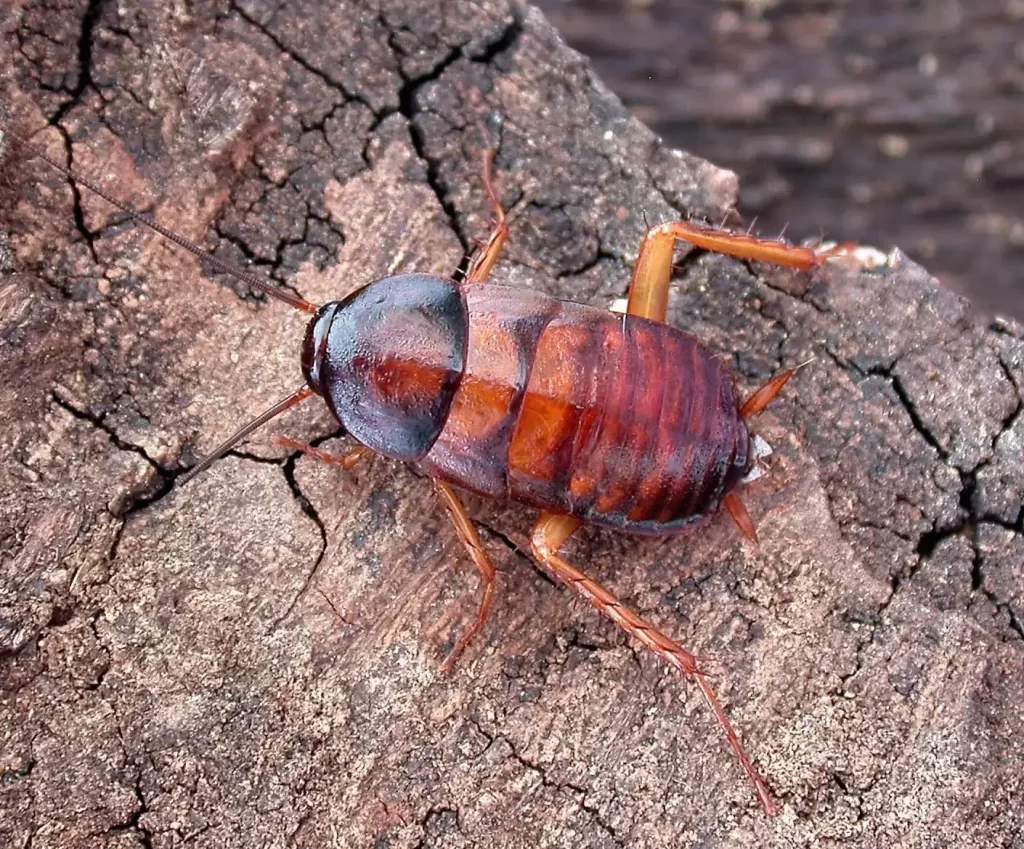
The Oriental cockroach, often called a “water bug,” is a common pest in Utah known for its preference for cool, damp environments. It is about 1 inch long, with a shiny dark brown to black body, and is slower-moving than other cockroach species. Oriental cockroaches are typically found in basements, crawl spaces, drains, and under sinks, where moisture is abundant. Unlike German or American cockroaches, they are less likely to be found in kitchens, but they can still enter homes through sewer systems or cracks in foundations. They feed on decaying organic matter and garbage, and while they don’t reproduce as rapidly as some other species, they can still spread bacteria and produce foul odors, making them an unpleasant and unsanitary presence indoors.
Brown-Banded Cockroach
Supella longipalpa
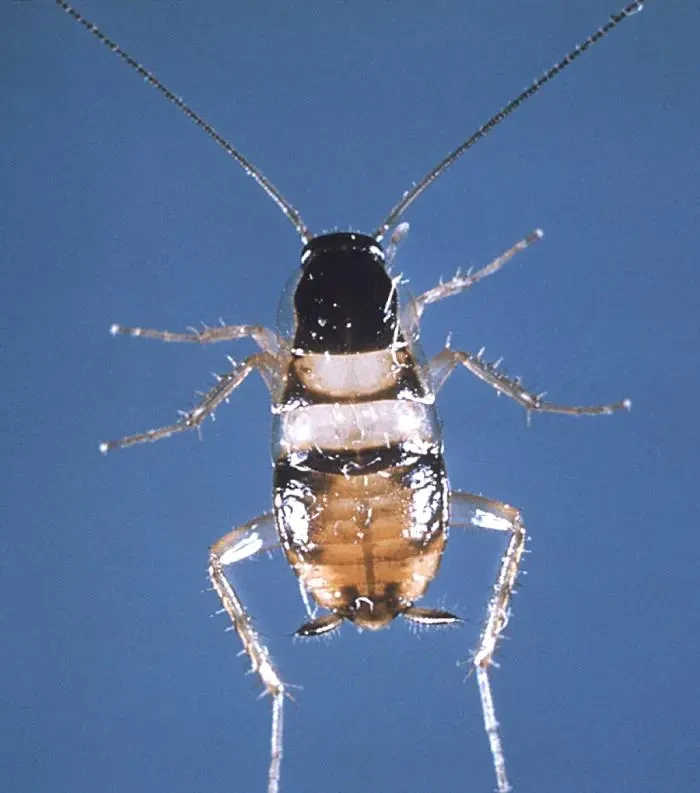
The brown-banded cockroach (Supella longipalpa) is a small but troublesome indoor pest found in Utah, measuring about ½ inch long with a light brown body and two distinctive pale bands across its wings and abdomen. Unlike other common cockroach species, brown-banded cockroaches prefer warm, dry environments and are often found higher up in buildings, such as in upper cabinets, behind picture frames, inside electronics, and in closets or bedrooms. They are nocturnal and avoid light, making them difficult to detect until an infestation is well established. Although they reproduce more slowly than German cockroaches, they still pose a health risk by contaminating food and surfaces with bacteria and allergens. Their elusive nature and preference for scattered hiding spots often make control efforts more challenging, requiring thorough inspection and targeted treatment.