Wasps are aggressive and potentially dangerous pests in Utah, especially during the warmer months when their activity peaks. Common species like yellowjackets, paper wasps, and mud daubers often build nests around homes, under eaves, in attics, or in the ground. While wasps play a role in controlling other insects, they become a serious nuisance—and even a health threat—when they nest near human activity. Their stings are painful and can trigger allergic reactions, ranging from mild swelling to severe anaphylaxis in sensitive individuals. Wasps are especially territorial and may sting multiple times if they feel their nest is threatened. Because of the risks involved, proper nest identification and professional removal are often necessary to safely control wasp infestations.
Species of Wasps
Yellowjackets
Vespula species
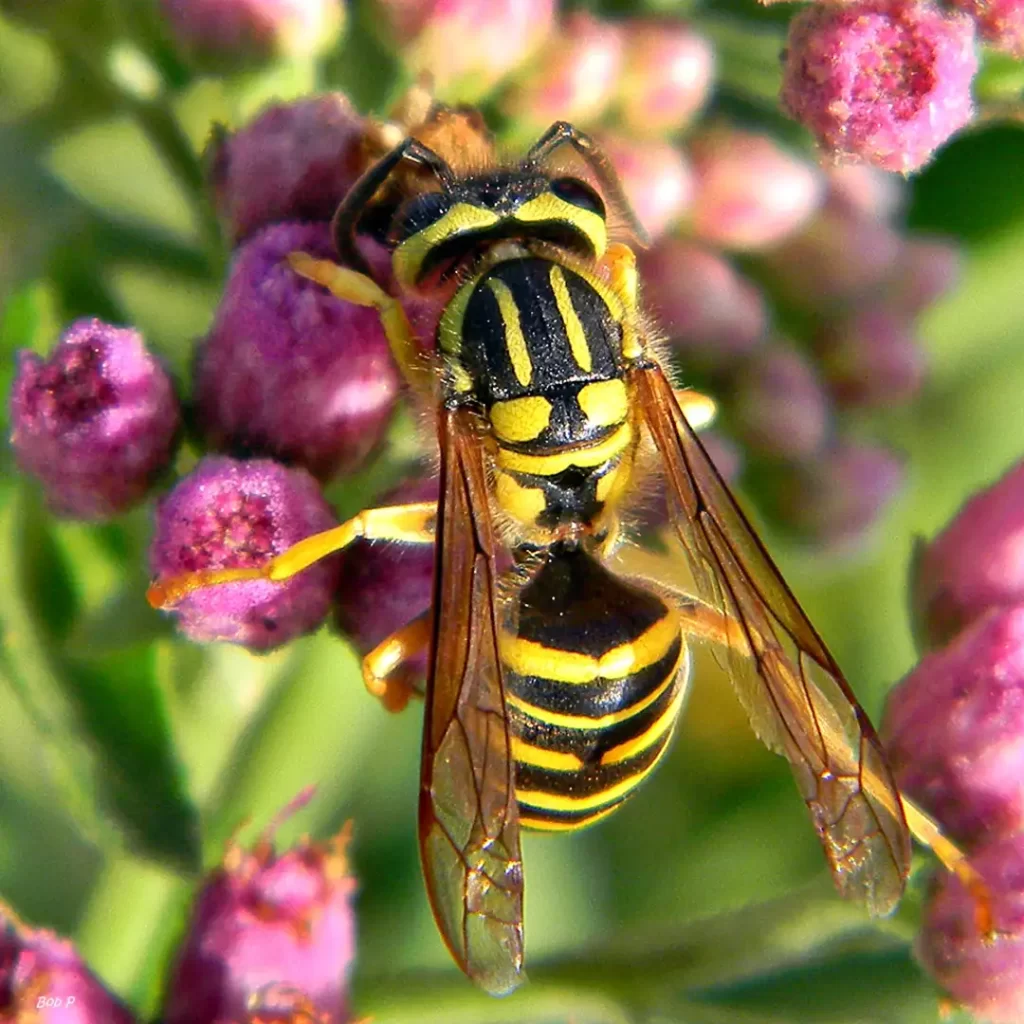
Yellowjackets (Vespula species) are among the most aggressive and problematic wasp pests in Utah. They have distinct black and yellow striped bodies, compact and hairless, and are often mistaken for bees—but unlike bees, yellowjackets can sting multiple times. These social wasps build nests in the ground, wall voids, attics, or dense shrubs, and they become especially aggressive in late summer and early fall when food sources become scarce. Yellowjackets are attracted to meats, sweets, and garbage, making them a major nuisance at outdoor gatherings and around trash cans. Their stings are painful and can trigger severe allergic reactions in some individuals, including anaphylaxis. Because they defend their nests fiercely, professional removal is often necessary for safety.
Paper Wasps
Polistes species
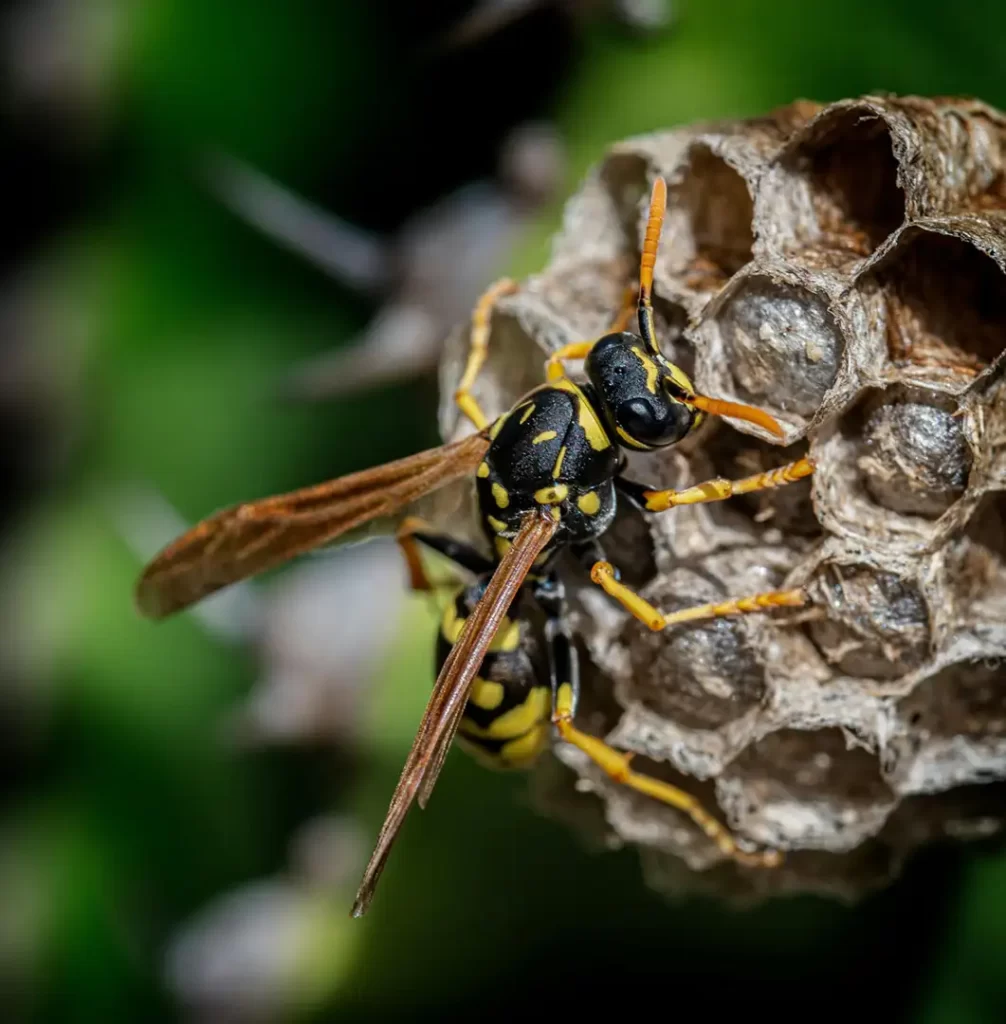
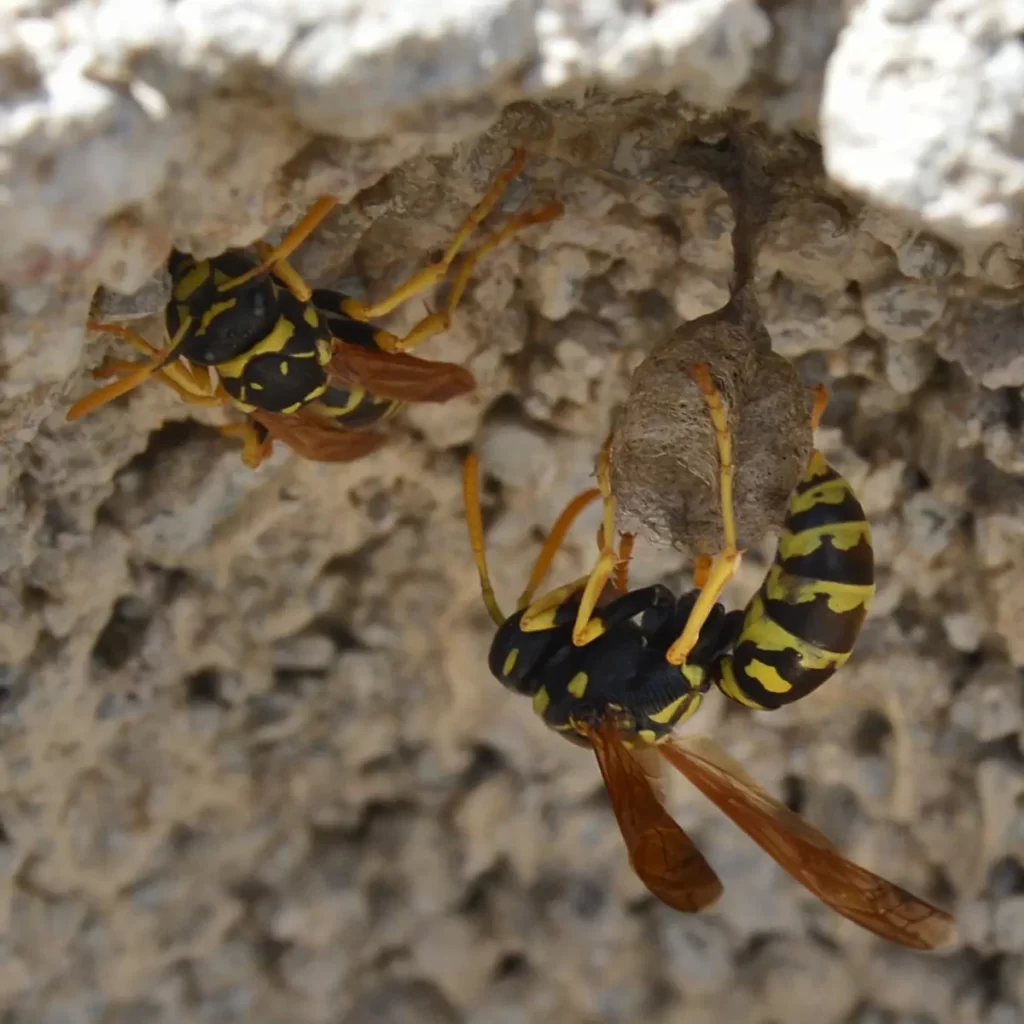
Paper wasps (Polistes species) are common stinging insect pests in Utah, recognizable by their slender bodies, long legs that dangle in flight, and coloration ranging from reddish-brown to dark brown with yellow markings. They build distinctive umbrella-shaped nests made from chewed plant fibers and saliva, typically found hanging under eaves, decks, railings, or in sheds and attics. Paper wasps are less aggressive than yellowjackets, but they will sting if their nest is disturbed. Their stings are painful and can cause allergic reactions in sensitive individuals. While they help control garden pests by feeding on caterpillars and other insects, paper wasps can become a serious nuisance when nesting near high-traffic areas around homes or businesses. Paper wasps are very similar in appearance to yellowjackets, but the easiest way to distinguish between the two is in their nest-building habits.
Mud Daubers
Sceliphron & Chalybion species
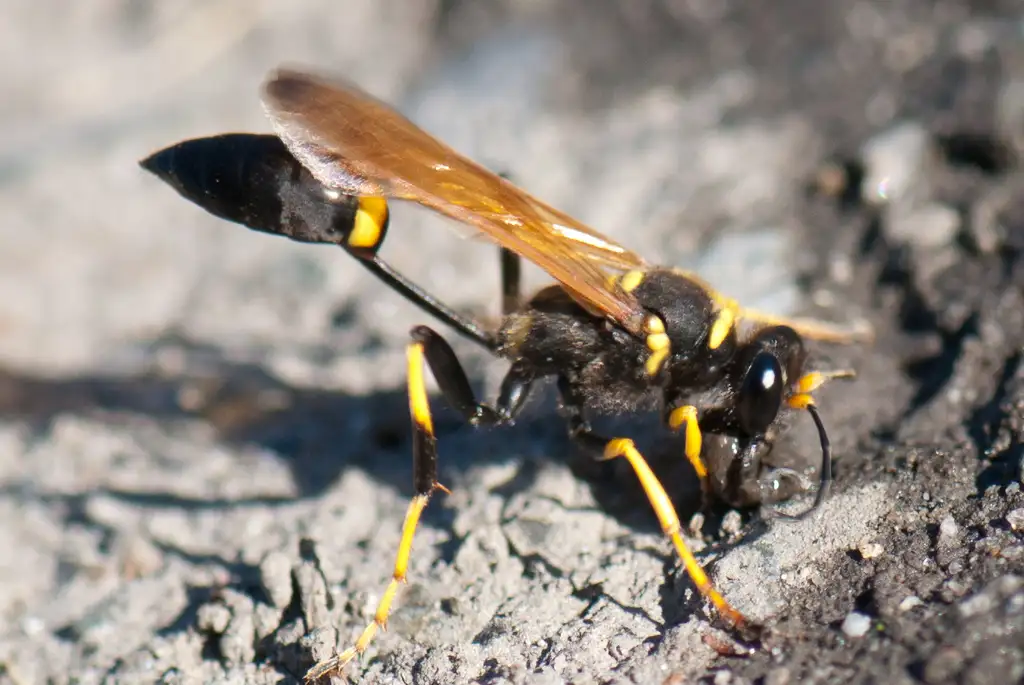
Mud daubers are solitary wasps commonly found in Utah, known for their distinctive long, slender bodies with a narrow “waist” and varying colors—typically black, metallic blue, or black with yellow markings, depending on the species. They are named for their habit of building mud tube nests on sheltered surfaces like walls, eaves, attics, garages, and sheds. Unlike social wasps, mud daubers are non-aggressive and rarely sting, making them more of a nuisance than a threat. They feed on nectar and hunt spiders, which they paralyze and store in their mud nests as food for their developing larvae. While not dangerous, their nests can stain surfaces and become unsightly, especially when left unmanaged around homes and structures.
Bald-Faced Hornets
Dolichovespula maculata
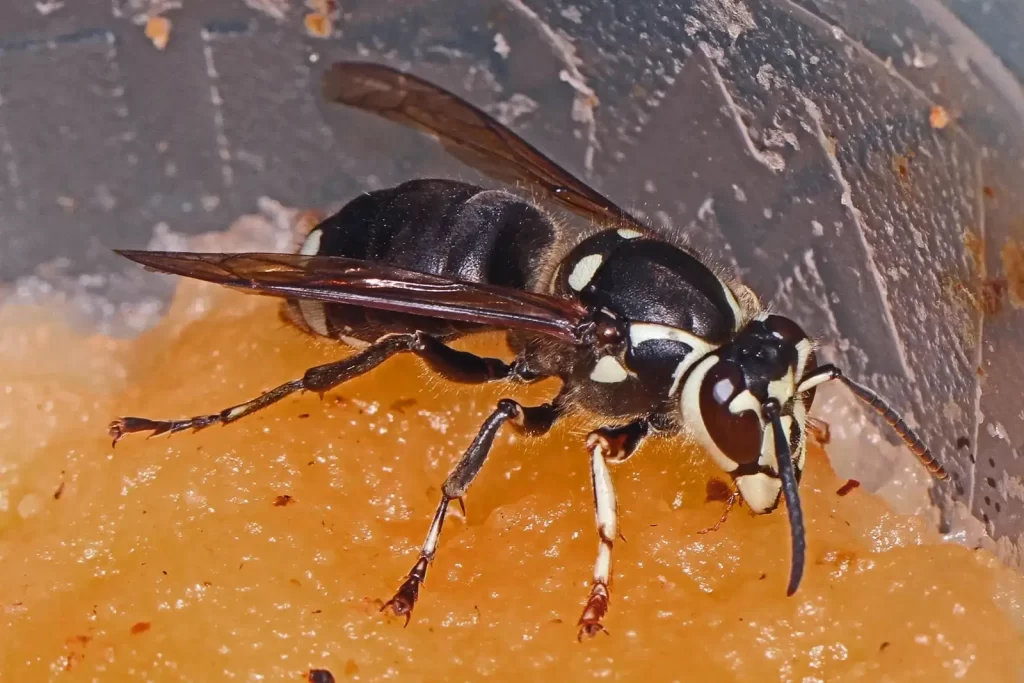
Bald-faced hornets are a large and aggressive wasp species found in Utah, easily recognized by their black bodies with white markings on the face and thorax. Despite their name, they are technically a type of yellowjacket, not a true hornet. These social wasps build large, football-shaped paper nests high off the ground—in trees, on buildings, or under overhangs—and fiercely defend them when disturbed. Bald-faced hornets can deliver multiple painful stings and are known to swarm in large numbers if they feel threatened. While they help control insect populations by feeding on flies and other pests, their territorial behavior and powerful sting make them a serious hazard when nesting near homes, walkways, or public areas.
Sand Wasps
Bembix species
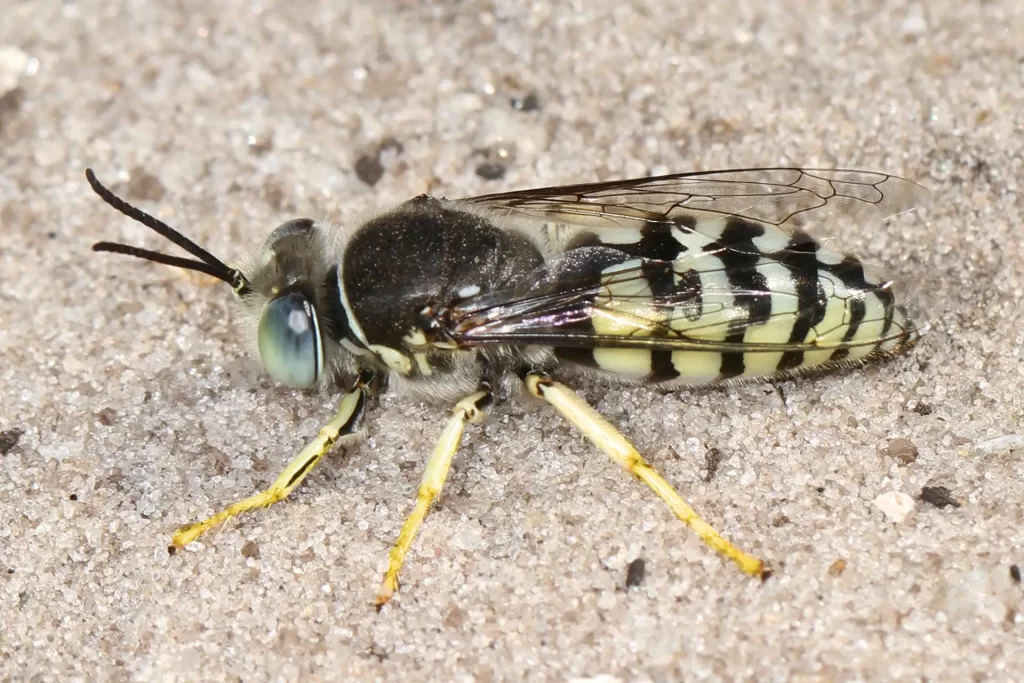
Sand wasps (Bembix species) are solitary wasps found in Utah, especially in dry, sandy areas such as playgrounds, construction sites, and open fields. They have black and yellow or white striped bodies, often resembling small hornets, and are fast flyers with a darting flight pattern. Sand wasps dig burrows in loose soil, where each female creates a nest to lay eggs and stock it with flies and other insects as food for her larvae. Unlike social wasps, sand wasps are non-aggressive and rarely sting unless directly handled or provoked. While their presence in large numbers can be alarming, they are generally harmless to people and beneficial for natural insect control, particularly of flies.
How to Identify Nests
Yellowjacket Nests
Yellowjacket nests are constructed from a papery material made of chewed wood fibers mixed with saliva, and their location and appearance can vary depending on the species. In Utah, many yellowjackets build ground nests, often in abandoned rodent burrows, thick vegetation, or mulch, which typically appear as small holes in the ground with noticeable wasp traffic entering and exiting. Others construct aerial or structural nests attached to buildings, trees, or shrubs, often tucked under eaves, in attics, wall voids, or sheds. These above-ground nests are usually gray, round or football-shaped, and can grow quite large as the colony expands. One of the most obvious signs of a yellowjacket nest is heavy wasp activity, especially during the day, with insects flying in and out of a specific point. Buzzing sounds from within walls or trees may also indicate a hidden nest. Because yellowjackets are highly aggressive and capable of stinging multiple times, especially when their nest is disturbed, it’s important to avoid direct contact and seek professional removal if a nest is found near your home or in a high-traffic area.
Paper Wasp Nests
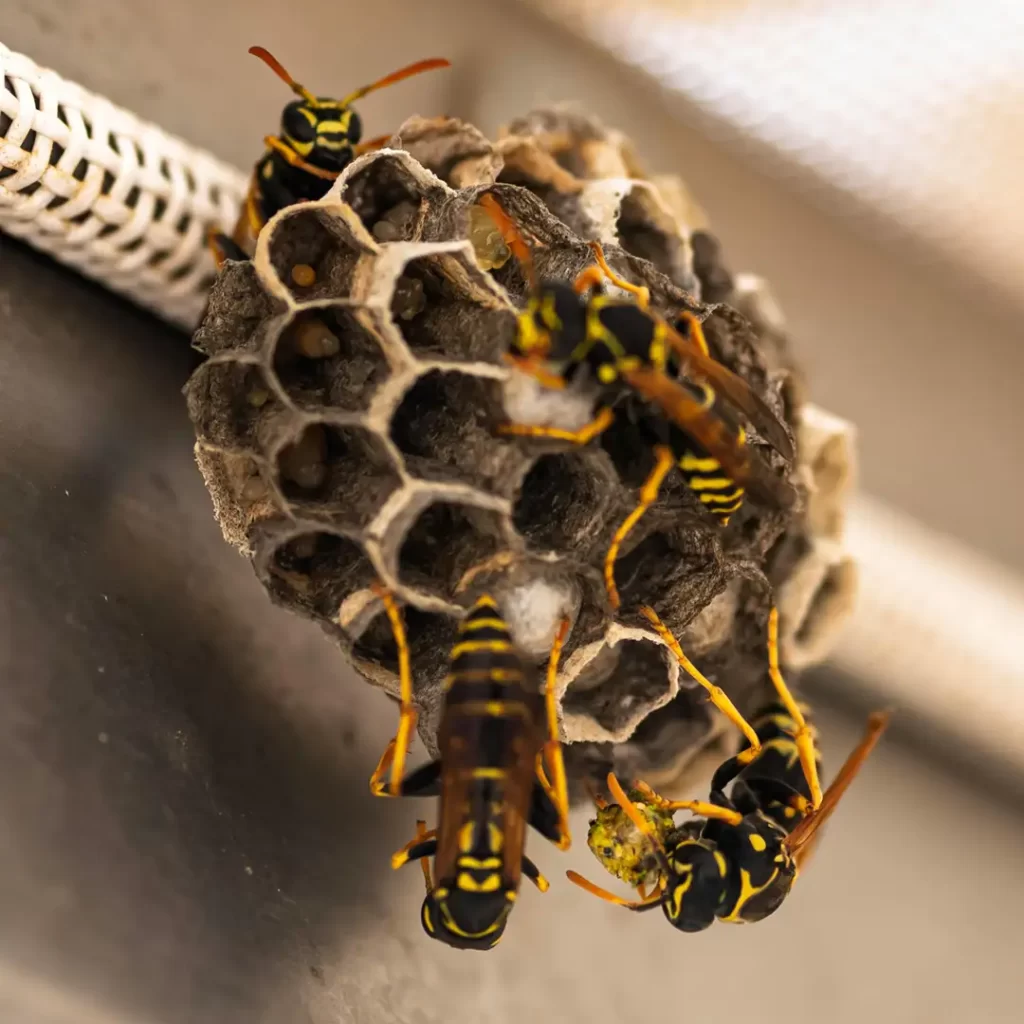
Utah paper wasp nests are easily recognizable by their distinctive umbrella-shaped, open comb structure made from chewed wood fibers mixed with saliva, giving them a papery texture. These nests are typically found hanging from sheltered locations such as under eaves, porch ceilings, decks, fences, tree branches, or inside sheds and garages. Unlike yellowjacket nests, paper wasp nests are exposed with visible hexagonal cells where larvae develop, often dangling from a single stalk. You can identify a paper wasp nest by looking for these small, neat, open-faced nests, usually ranging from a few inches to about a foot wide, with wasps frequently flying in and out during daylight hours. Paper wasps tend to be less aggressive than yellowjackets but will sting if their nest is threatened, so caution is advised when inspecting or removing these nests.
Mud Dauber Nests
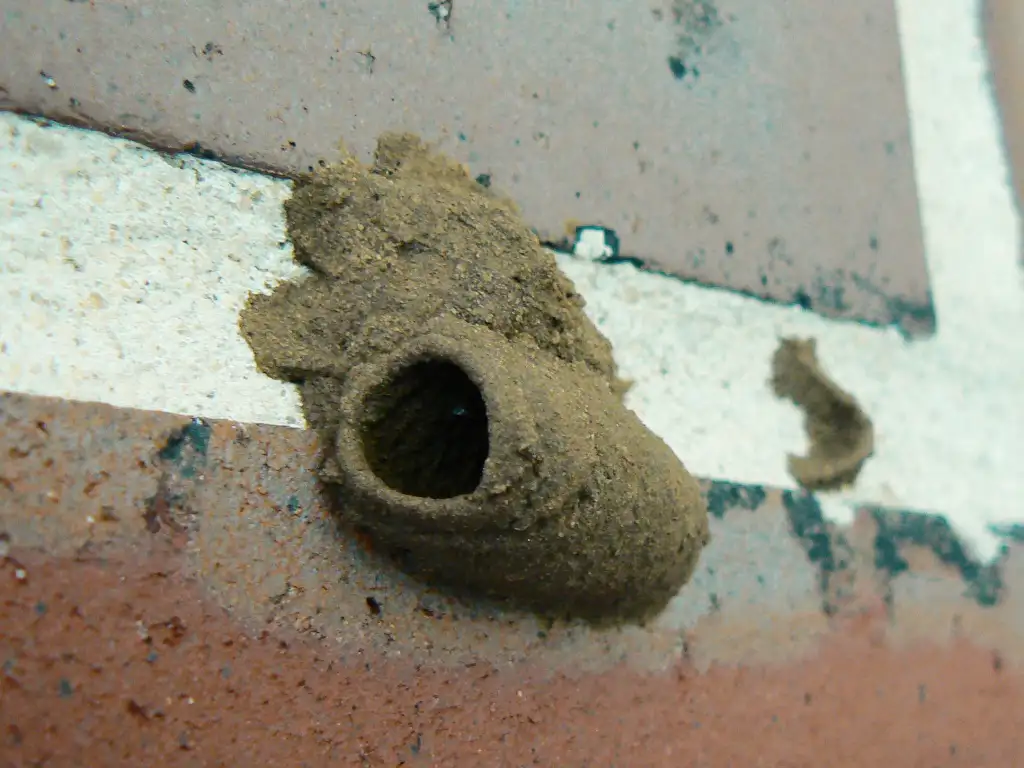
Mud dauber nests are distinctive structures made from mud that female mud daubers carefully gather and shape into tubular or cylindrical cells. These nests are usually found attached to sheltered surfaces such as walls, eaves, attics, garages, sheds, or under bridges. The nests often appear as clusters of smooth, rounded mud tubes or small mud “blobs,” varying in size but generally about the length and thickness of a finger. Unlike social wasps’ paper nests, mud dauber nests are solid and compact, with no open cells visible. To identify a mud dauber nest, look for these mud structures in protected, dry areas, often with solitary wasps flying nearby. Mud daubers are non-aggressive and rarely sting, but their nests can become unsightly or stain surfaces if left unchecked.
Bald-Faced Hornet Nests
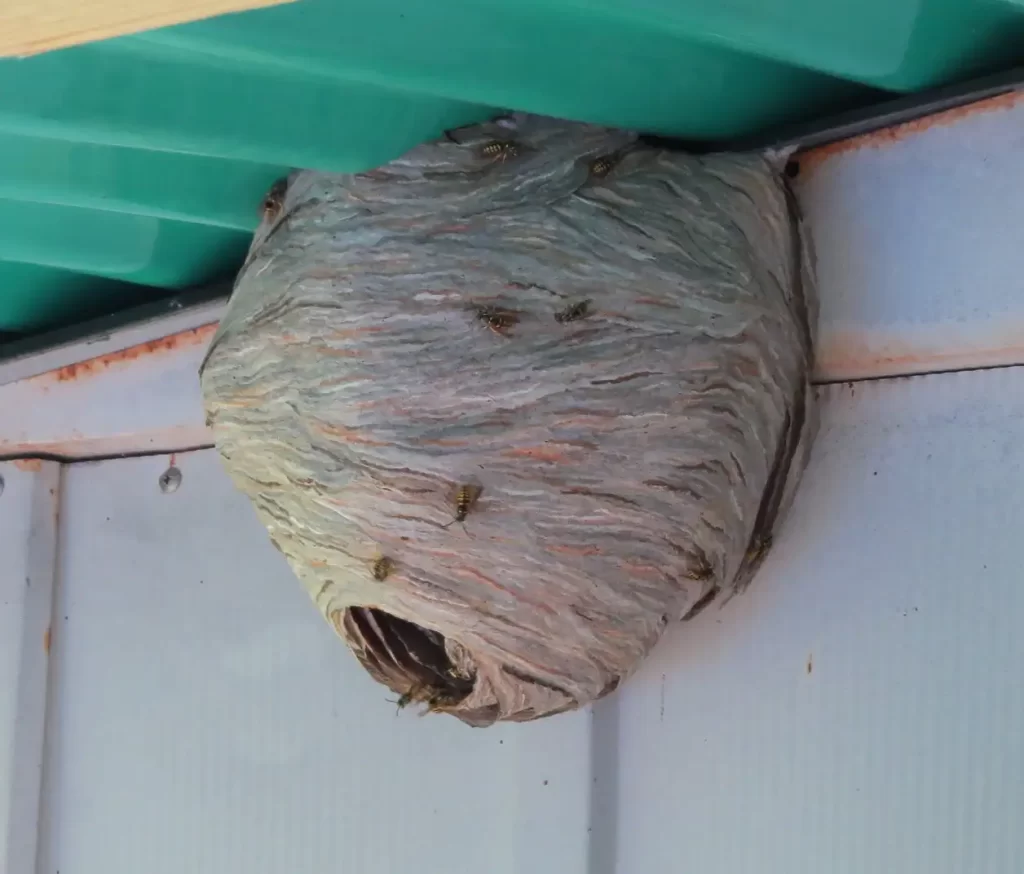
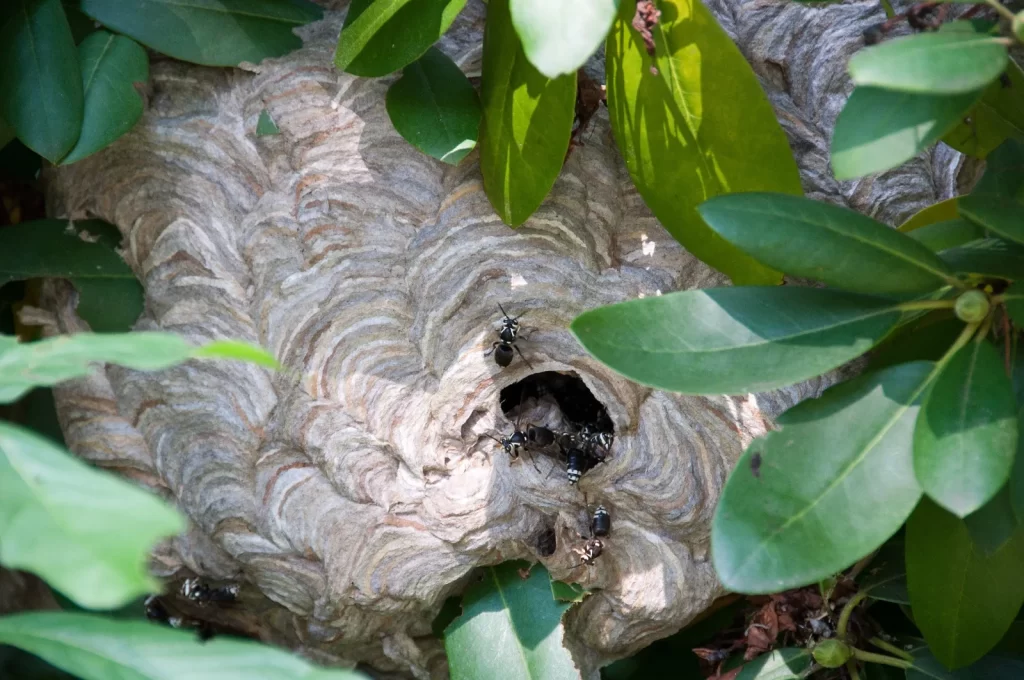
Bald-faced hornet nests are large, distinctive, and easily recognizable structures made from chewed wood fibers mixed with saliva, forming a sturdy, grayish papery shell. These nests are typically football-shaped or oval, and can grow quite large—sometimes reaching over a foot in length. Bald-faced hornets build their nests high off the ground in trees, shrubs, or on buildings under eaves and overhangs, often in secluded or sheltered locations. The nests are completely enclosed except for a small opening near the bottom where hornets enter and exit. You can identify a bald-faced hornet nest by its size, shape, smooth papery surface, and the high level of aggressive hornet activity around the entrance, especially during warmer months. Because these hornets are very defensive and can sting repeatedly, it’s best to avoid disturbing their nests and seek professional help for removal.
Sand Wasp Nests
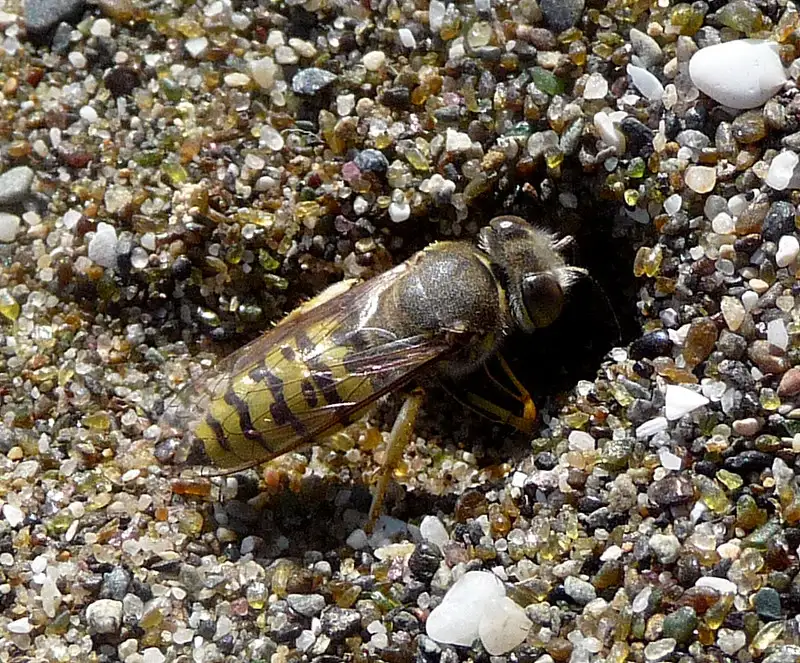
Sand wasp nests are simple burrows dug into loose, sandy, or well-drained soil, often found in dry, open areas like beaches, playgrounds, construction sites, or sandy patches in gardens. Unlike paper or mud nests, sand wasps do not build visible structures above ground; instead, each female digs a small, vertical tunnel in the sand where she lays eggs and stocks the chamber with paralyzed insects, such as flies, to feed her larvae. You can identify sand wasp nests by looking for small, round holes in sandy or loose soil, often surrounded by a slight mound of displaced dirt. Activity around these holes—fast-flying wasps darting in and out—is a strong indicator of sand wasp nesting. Sand wasps are generally non-aggressive and rarely sting unless directly threatened.