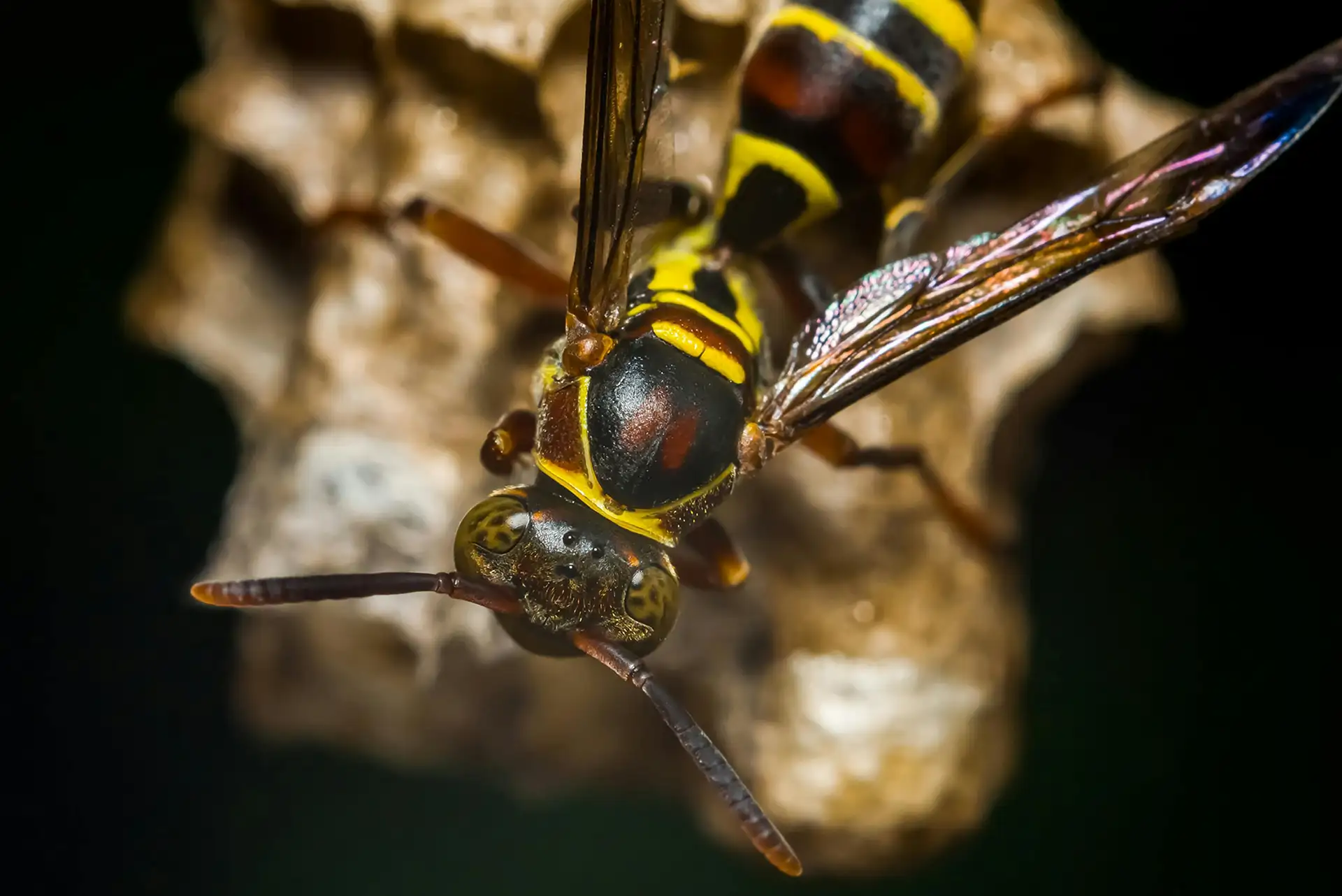
Why Knowing Nest Locations Matters
If you’re seeing wasps around your home, there’s a good chance they’re already scouting for—or actively building—a nest nearby.
In Utah, wasps tend to choose protected, low-traffic areas that offer shelter from weather and predators. Catching these early nesting spots can prevent a much larger problem later in the season.
Wasps are one of the most common pests in Lehi homes during spring and summer, especially as queens begin searching for protected areas to build new nests around roofs, patios, sheds, and eaves.
Common Wasp Nesting Locations Around Utah Homes
Roof Eaves and Soffits
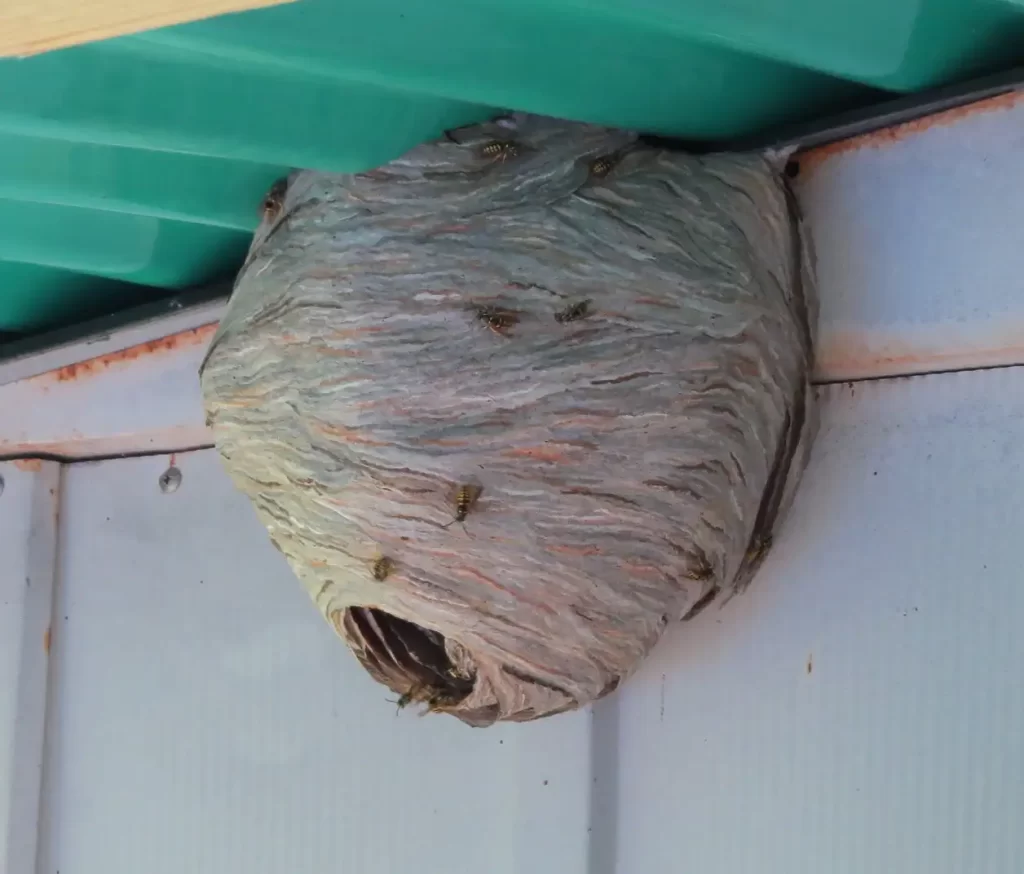
One of the most common nesting areas.
- Overhangs that provide shade
- Protected corners
- Areas with minimal disturbance
Decks, Patios, and Railings
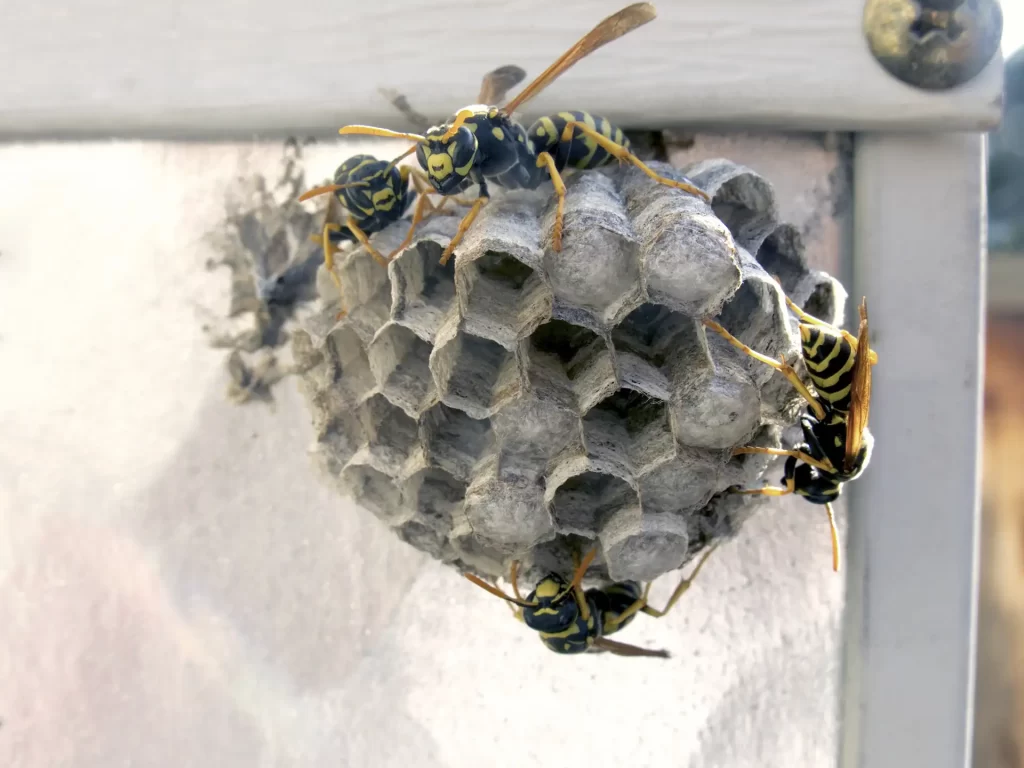
Outdoor living spaces often provide ideal shelter.
- Under deck boards
- Patio covers
- Fence posts and railings
Garages and Sheds
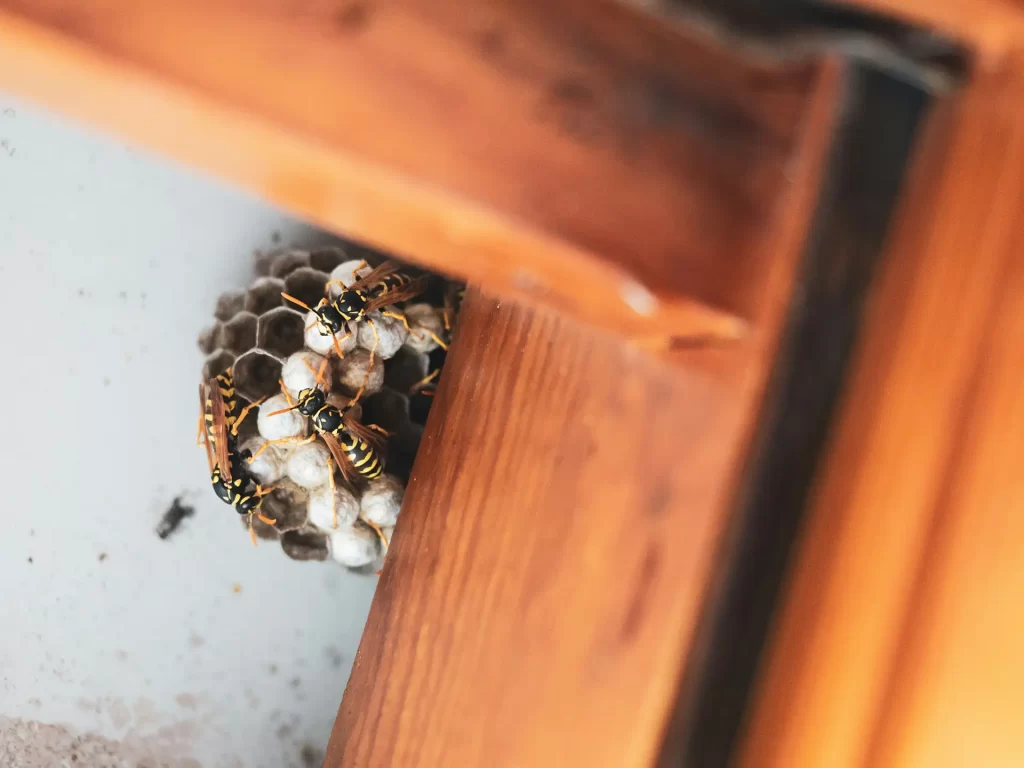
Wasps love enclosed spaces that are rarely disturbed.
- In corners
- Along ceilings
- Near stored items
Trees and Bushes
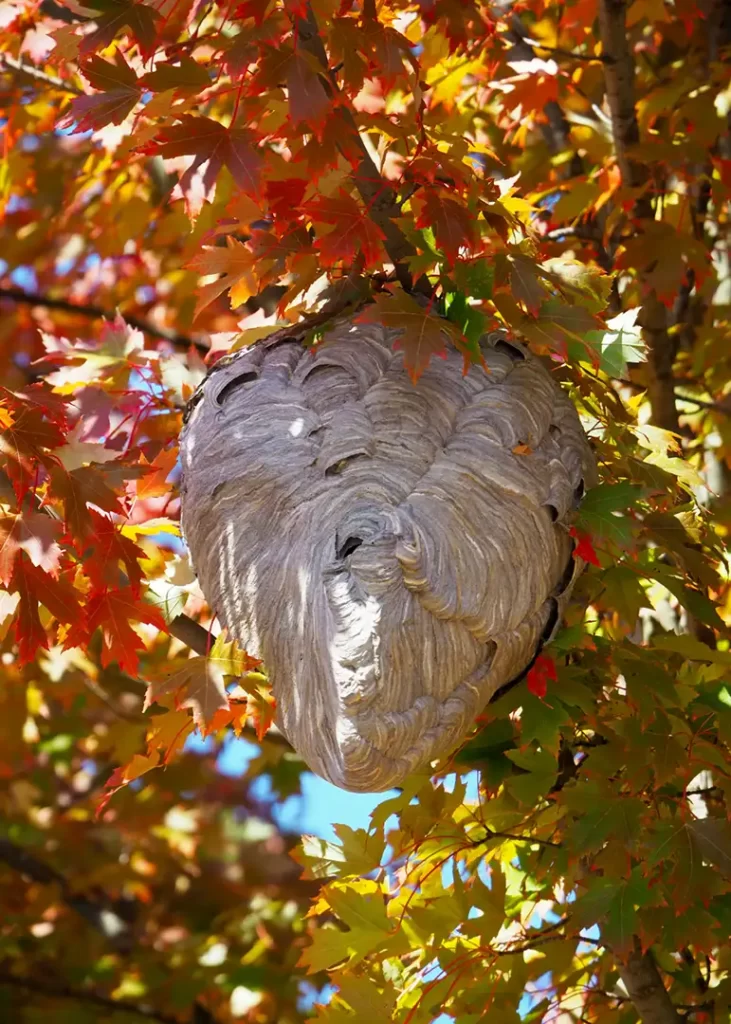
Some wasp species build nests in vegetation.
- Dense shrubs
- Tree branches close to the home
Underground (Yellow Jackets)
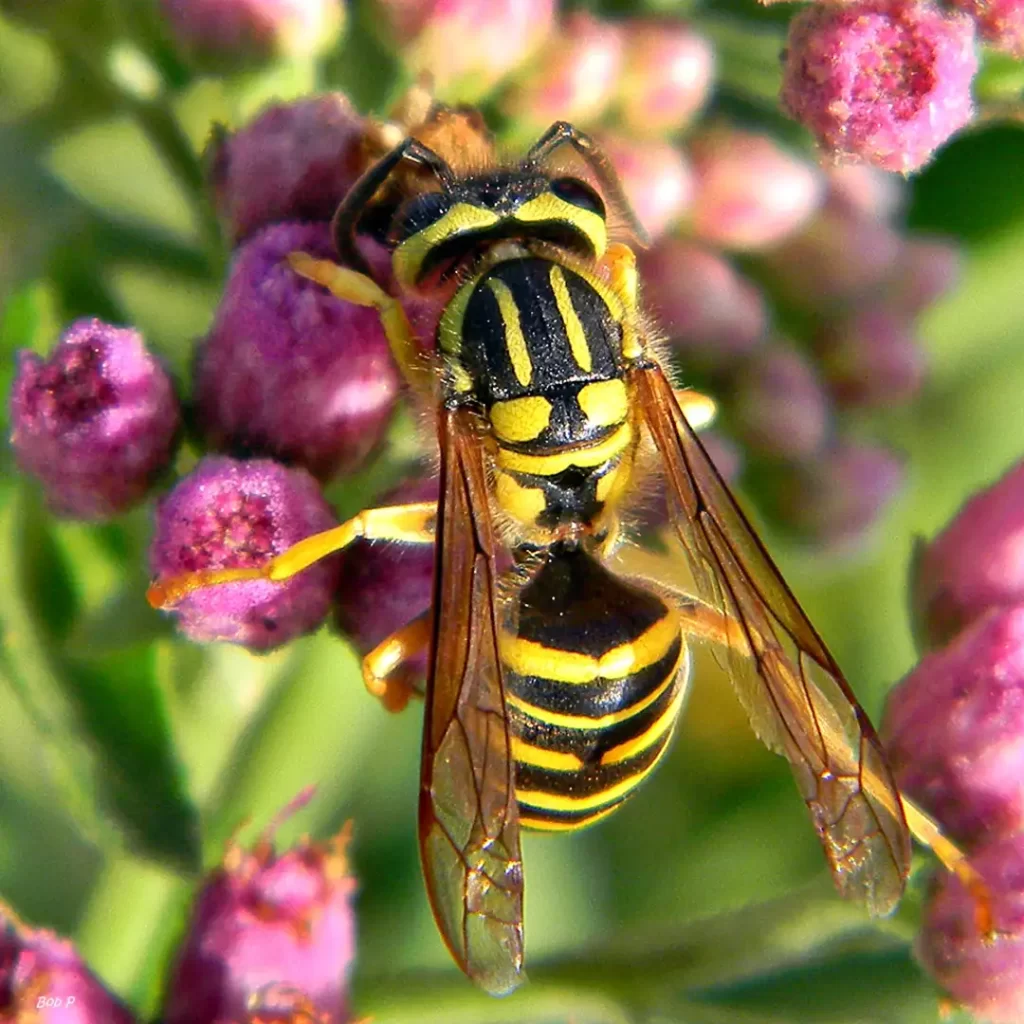
Unlike paper wasps, yellow jackets often nest in the ground.
- Holes in the yard
- Increased wasp traffic near a single spot
Why Early Nests Are Easier to Control
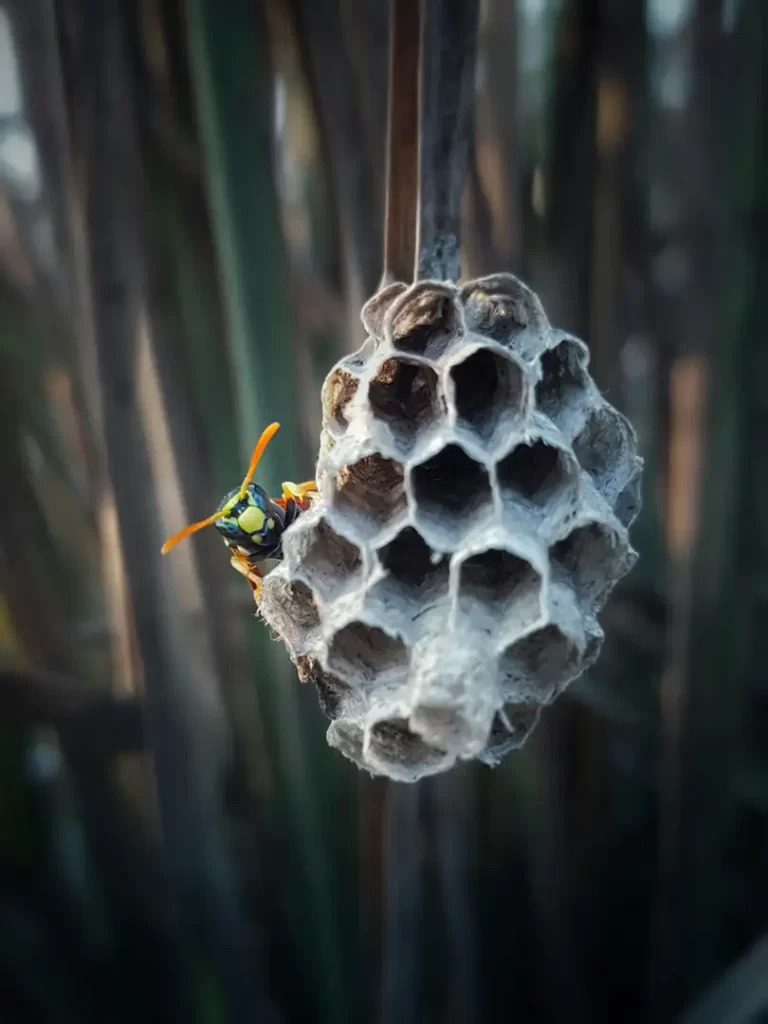
Early in the season, nests are:
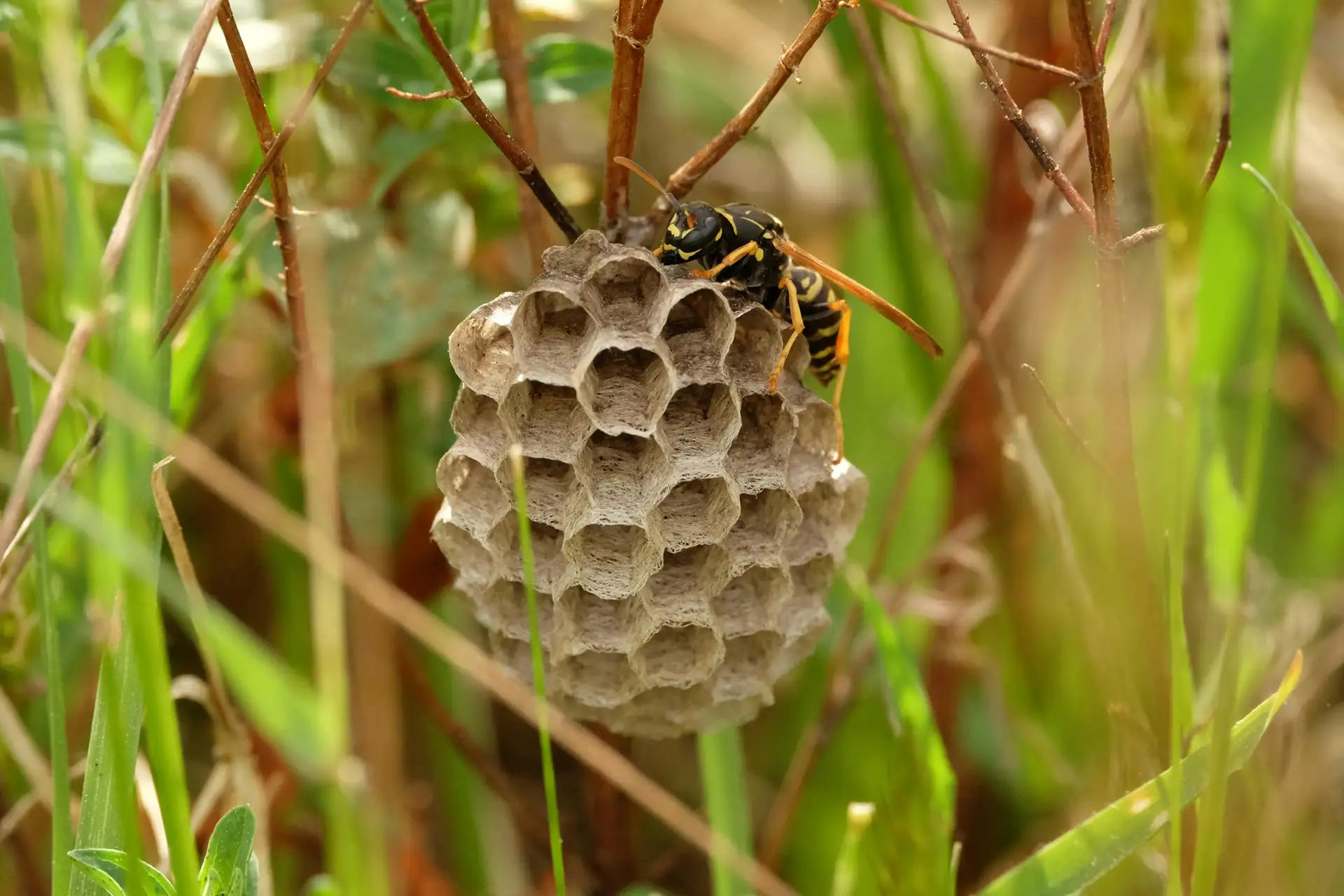
- Small (often golf ball size or smaller)
- Controlled by a single queen
- Much less aggressive
Removing them early prevents colonies from growing into hundreds or thousands of wasps.
How to Prevent Wasps From Nesting
-
Inspect Your Home Regularly
Walk around your home weekly during spring:
- Check eaves and corners
- Look under decks and structures
-
Remove Starter Nests Immediately
Small nests can often be removed safely before they grow.
-
Seal Entry Points
- Close gaps in siding
- Repair soffits and vents
-
Reduce Attractants
- Keep trash sealed
- Clean outdoor eating areas
- Eliminate standing water
Be sure you’re ready to prevent pest problems this spring with our complete seasonal pest prevention guide.
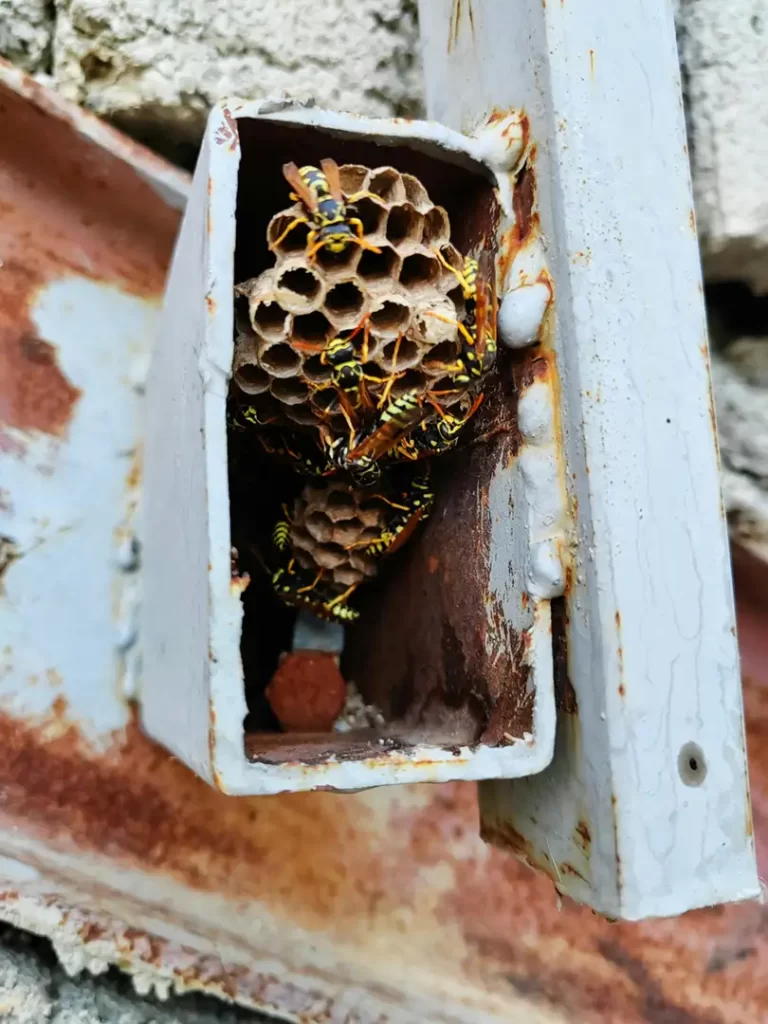
Common Mistakes Homeowners Make
-
Ignoring early nests
They grow rapidly
-
Waiting until summer
Colonies become aggressive
-
Disturbing large nests
Can lead to stings and swarming
Learn about Utah Wasps
See our pest library for the different species of wasps in Utah and how to identify them.
When to Call a Professional
Call pest control if:
- The nest is larger than a baseball
- Wasps are aggressive
- Nests are in hard-to-reach areas
What Utah Homeowners Should Do Next
If you’re seeing wasps regularly, it’s a strong sign that nesting activity has already begun.
Stop Wasp Nests Before They Become Dangerous
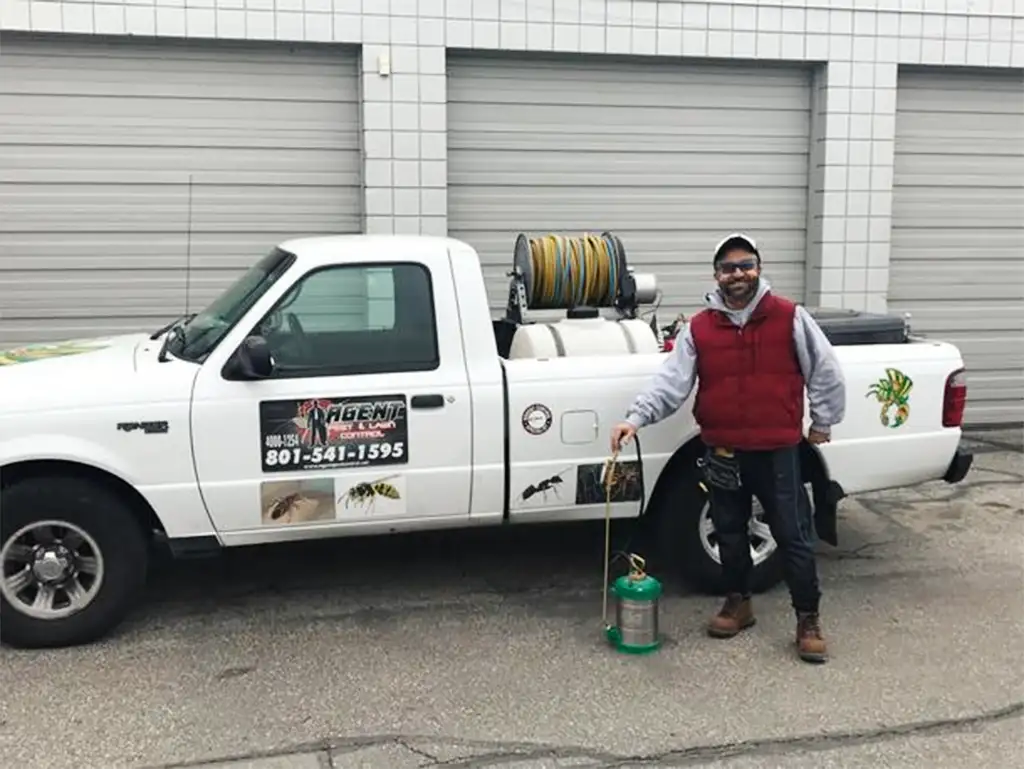
At Agent Pest Control, we help Utah homeowners:
- Locate hidden nests
- Remove them safely
- Prevent future nesting
Common Questions
Wasps commonly build nests under roof eaves, in soffits, under decks, inside sheds or garages, and sometimes underground depending on the species.
Wasps typically begin building nests in early spring when temperatures start to rise and queens emerge from winter shelter.
You’ll usually see frequent wasp activity entering and exiting the same location, which indicates an active nest.
Small early nests may be manageable, but larger or active nests can be dangerous and are best handled by professionals.
Stop Wasps Before Nests Become a Bigger Problem
At Agent Pest Control, we help Utah homeowners safely eliminate wasp nests and prevent future activity before it becomes dangerous.
Schedule your wasp control service today and protect your home before nest activity escalates.